20 Flow Haircuts with Beard – Your Complete Style Blueprint (2026)
Published: June 1, 2026
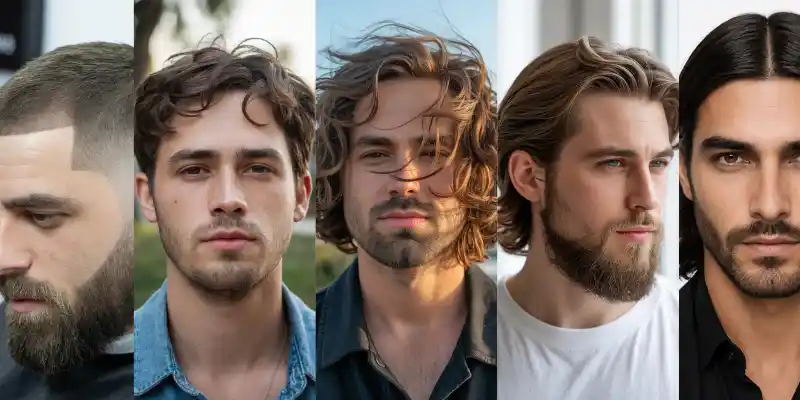
The flow haircut paired with a beard is one of the few men’s style combinations that genuinely gets better the more effort — or lack of effort — you put in. But “just grow your hair out” is terrible advice. The difference between a guy who looks intentionally cool and a guy who just looks overgrown comes down to three things: proportion, face-shape awareness, and a consistent product routine. This guide covers all three.
What Exactly Is a Flow Haircut?
A flow haircut — also called a “bro flow” — is medium-to-long hair that grows past the ears and moves naturally, with no hard part or aggressive styling. It earned its name in hockey culture, where players let their hair grow beneath their helmets and flow out the back. The length typically ranges from ear length to shoulder length, and the defining quality is effortless movement.
What a flow is not: a man bun (too gathered), a mullet (too structured front-to-back), or a slick-back (too product-heavy). It sits in a category of its own — untethered, windswept, and deeply specific in its nonchalance.
Key stats to know:
- Minimum hair length needed: 5–7 inches
- Average grow-out time from a short cut: roughly 12 months
- Ideal beard trim frequency: every 2–4 weeks
- Products most flows actually need: one or two, chosen correctly
Why the Beard Makes the Flow Work
Here’s what most style articles miss: a flow without a beard can read as unfinished. Long hair alone creates a lot of visual mass around the head, and without structure at the jawline, the face can look undefined — especially for men with rounder or softer features.
A beard acts as an anchor. It gives the face a defined bottom edge, creates masculine structure, and balances the softness of flowing hair. The style paradox is this: the more relaxed and natural your hair looks, the more intentional your beard needs to appear. This interplay of effort and effortlessness is exactly what makes the combination work so well.
The Golden Rule of Flow + Beard:
If your hair is maximalist — long, voluminous, textured — your beard should be structured with defined lines. If your hair is minimal (ear-length, clean), your beard can be fuller and more relaxed. When both compete for attention at the same intensity, the look tips into chaos.
| Matching Your Flow + Beard to Your Face Shape |
|---|
This is what competitors rarely cover — and it’s the most practically useful thing you can know before committing to a look. Oval face: Most versatile shape. Any flow length works. Full beard, stubble, or goatee all complement it. Nothing is off the table. Square face: Shoulder-length or longer flows add softness to angular features. A rounded full beard softens the jaw further. Avoid short, squared-off beards — they double the angularity and make the face look blocky. Round face: Stick to an ear-to-collar length and avoid excessive side volume. A goatee or chin-heavy beard elongates the face. Avoid wide, puffed-out beards or full chin straps — they widen an already round face. Oblong or long face: Keep the flow at ear-length with volume on the sides to add width. A full, wide beard fills out the lower face. Avoid long, narrow beards — they further elongate what’s already long. Heart face: Medium length with layered volume at the collar works well. A full beard adds mass to the narrow chin. Avoid goatees — they emphasise the chin’s narrowness. Diamond face: Medium length; avoid extreme width at the sides. A chin beard or full beard with rounded cheeks balances the wide cheekbones. Avoid very short stubble — it highlights the wide cheekbones without adding balance below. |
The same beard that looks stunning on wavy hair can look completely wrong on fine, straight hair. Hair type determines which flow styles are actually achievable without constant styling intervention.
Straight hair achieves the cleanest, most polished flows — think slicked-back or centre-parted styles. The downside is that it can look flat or lifeless without the right product. A lightweight texturising spray gives the illusion of thickness and movement. Avoid going past shoulder length without regular trims to prevent a limp, stringy appearance.
Wavy hair is the ideal hair type for a flow. It has natural movement, holds a shape without much product, and looks better slightly undone. Embrace it. A light sea salt spray enhances what’s already there. Virtually every style in this guide works for wavy hair.
Curly hair produces distinctive, striking flows but requires the most deliberate handling. The key is moisture. Use a curl cream or light defining gel to keep curls defined without crunch. The silhouette will be more voluminous, so balance it with a shorter, more structured beard to avoid an overpowering look.
Fine or thin hair can achieve a flow but needs help. Keep length in the collar-to-ear range — going longer will look limp. Dry shampoo adds body between washes. A shorter, denser beard works in your favour here because it creates visual weight at the bottom of the face and draws attention away from the hair’s fineness.
Coarse or thick hair makes flow effortlessly and dramatically. The challenge is avoiding bulk. Regular thinning cuts at the barber keep the silhouette clean. Avoid too much product — thick hair doesn’t need it and will look heavy. Pair with a well-maintained medium beard to balance the overall volume.
20 Flow Haircut + Beard Combinations (With Honest Assessments)
Unlike gallery-style listicles, each combination below includes who it actually works for, what it actually requires, and what can go wrong.
01. Classic Hockey Flow + Neat Beard Lines
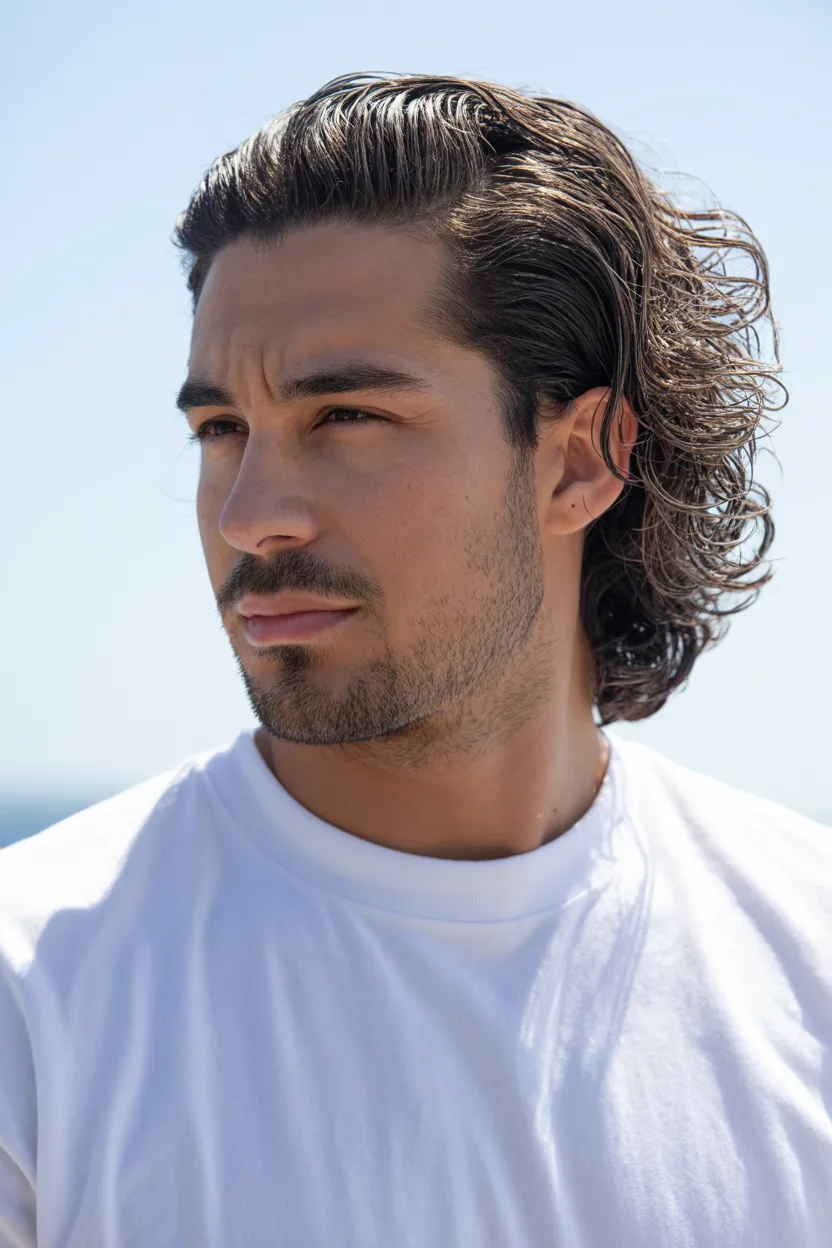
Collar-length hair with natural movement, paired with a half-inch beard with sharp cheek lines. The definitive athletic-confident look. Works best on wavy or straight hair with oval or square faces. Medium maintenance required. Face shapes: oval, square—hair types: wavy, straight.
02. Shoulder-Length Flow + Full Beard (Trimmed)
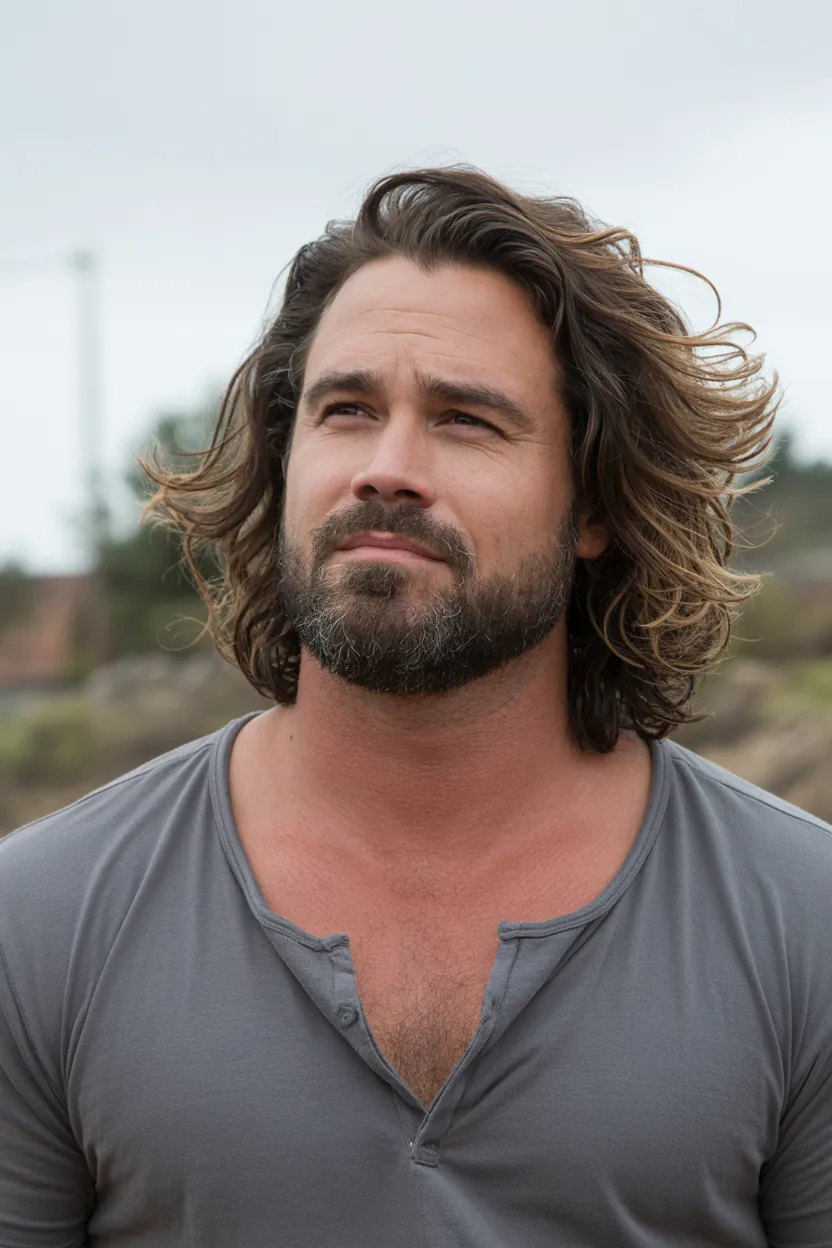
Maximum impact. Hair to the shoulders, beard kept at 1 to 1.5 inches with a defined neckline. Requires weekly beard maintenance or it tips into “lost in the woods.” Best on thick or wavy hair, square or oval faces. High maintenance required.
03. Ear-Length Flow + Designer Stubble
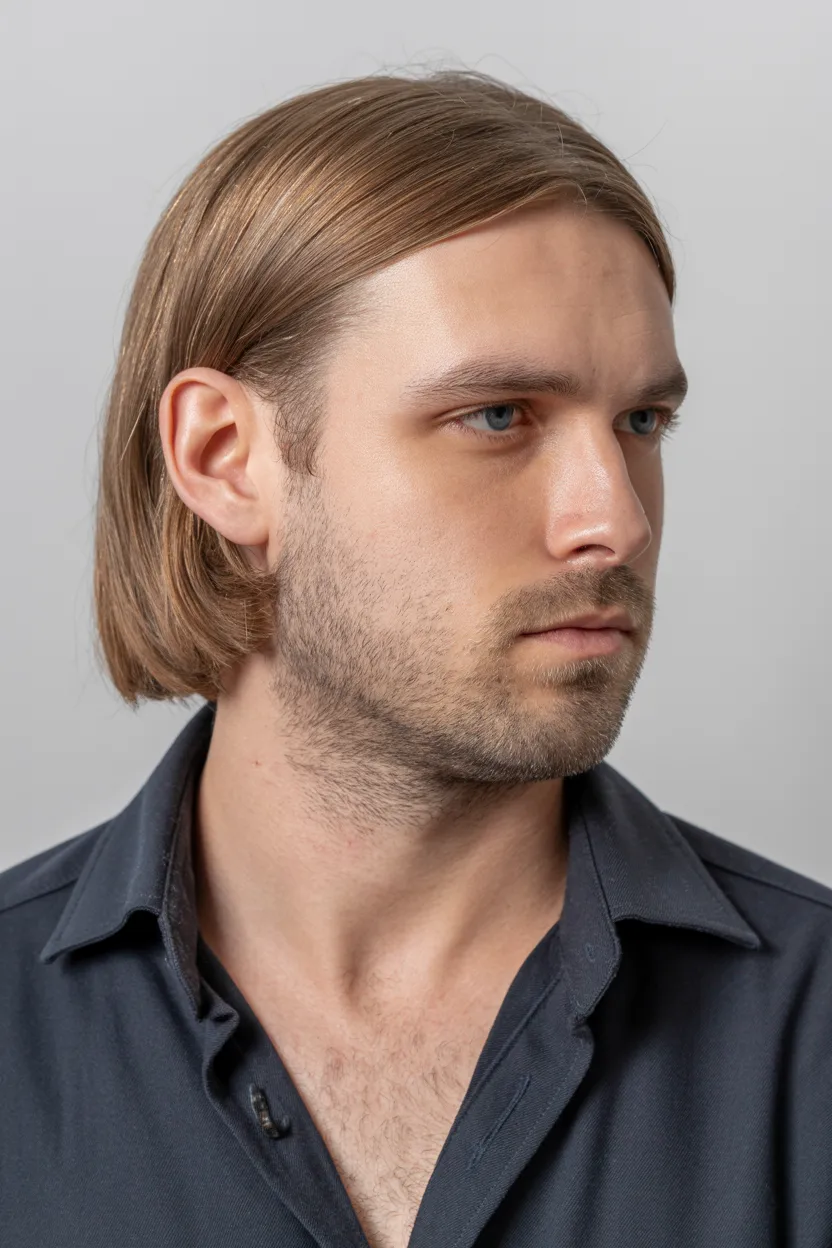
The most wearable, office-compatible entry point. Hair tucked behind the ears, three-to-five-day stubble trimmed to uniform length. Low maintenance, almost universally flattering. Works for all face shapes and hair types. This is the gateway flow — start here if you’re unsure.
04. Textured Flow + Shadow Beard
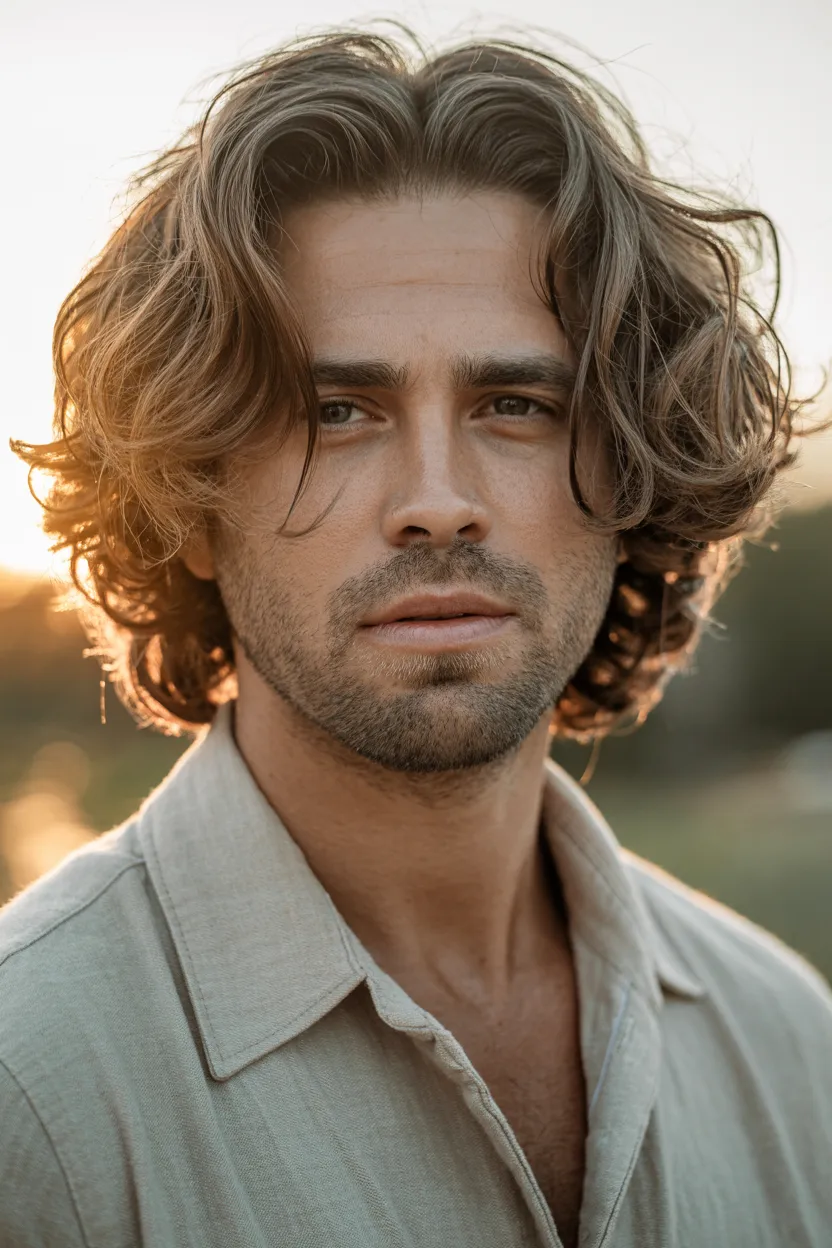
Hair with product-enhanced texture (no product visible), shadow beard trimmed to uniform 2 to 3mm. Looks like minimal effort, but it is actually precisely calibrated. Works best for guys who can grow even more facial hair. Face shapes: oval, heart. Hair types: wavy, curly.
05. Centre-Parted Flow + Beard Fade
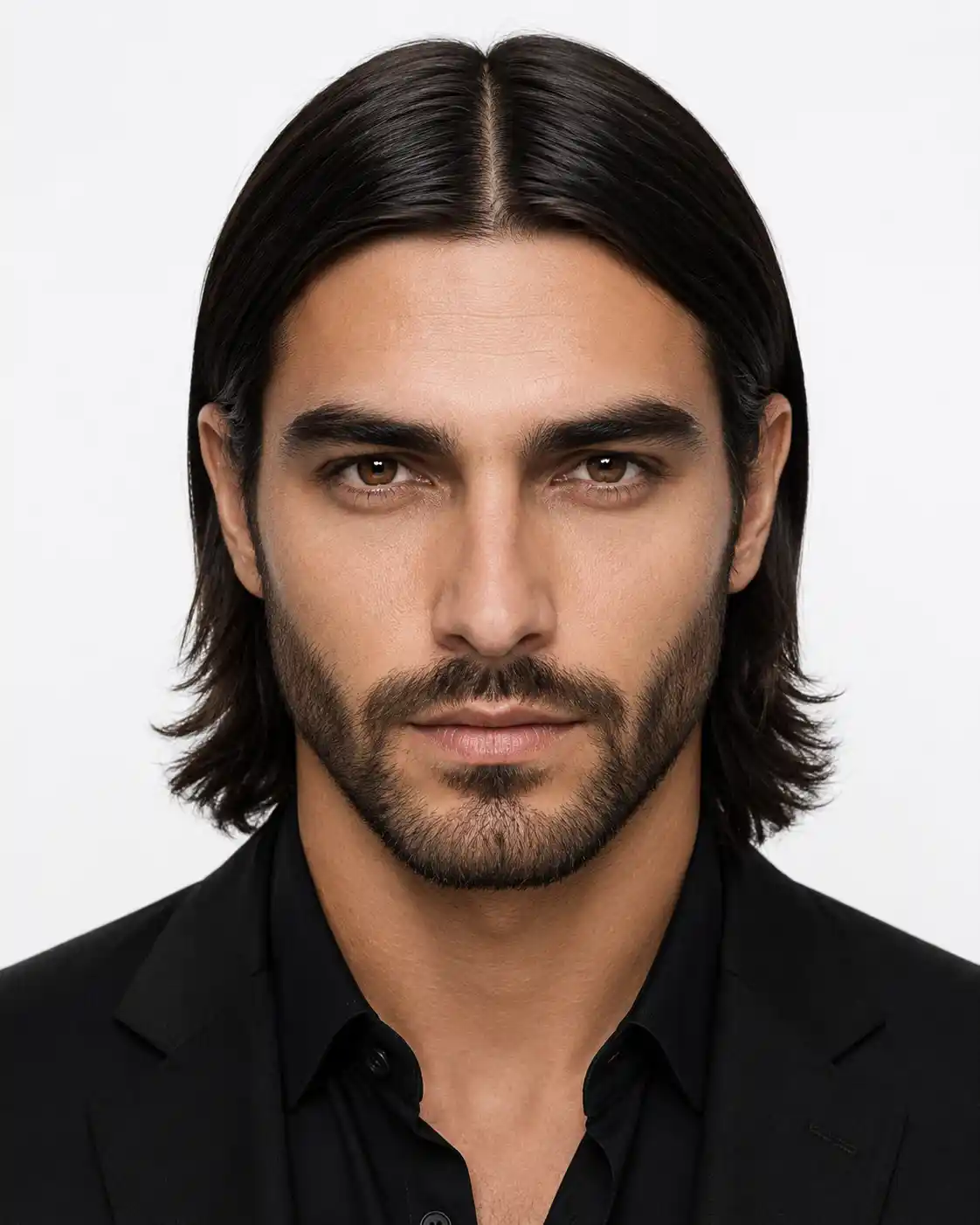
Parted down the middle with a natural fall on both sides, paired with a beard that fades seamlessly into the sideburns. The most editorial-looking option. Works for symmetrical faces; avoid with wide faces. Face shapes: oval, oblong. Hair types: straight, wavy.
06. Wavy Flow + Goatee
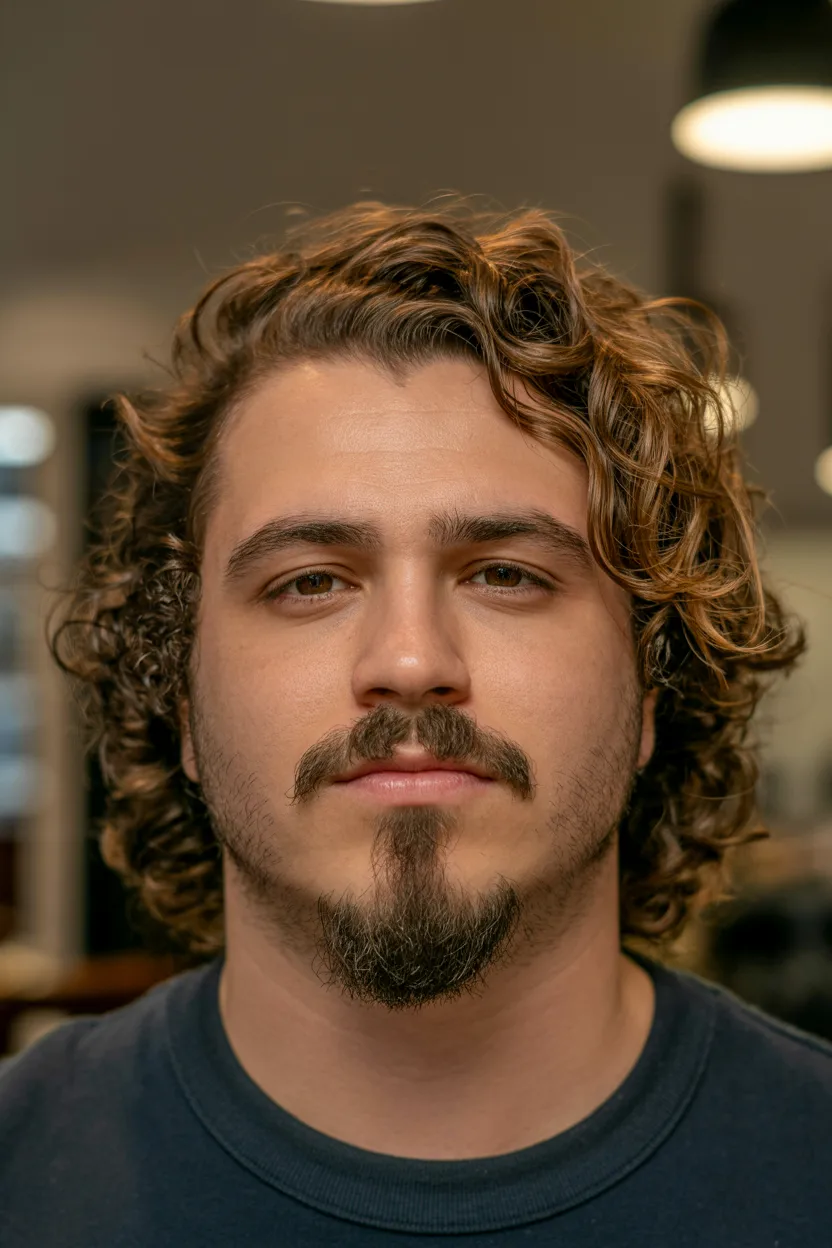
Collar-length waves left natural, paired with a clean goatee (moustache plus chin). Elongates round faces significantly. The goatee provides a focal point without competing with the hair’s volume. Face shapes: round, oval. Hair type: wavy.
07. Slicked-Back Flow + Precision Goatee
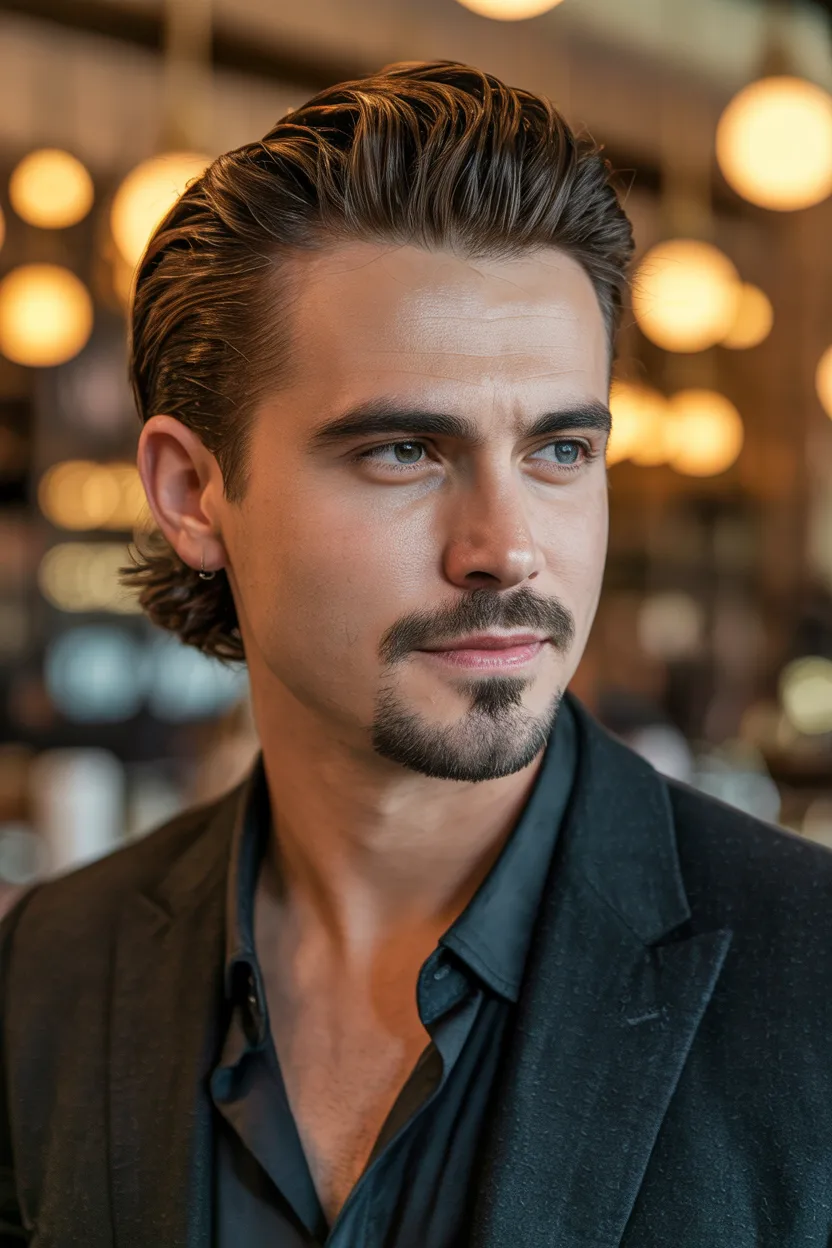
Flow pushed back with a light pomade — controlled, not plastered. Sculpted goatee following the natural jaw line. A sophisticated evening look that works year-round and pairs well with a tailored jacket. Face shapes: oval, square. Hair types: straight, wavy.
08. Curly Flow + Boxed Beard
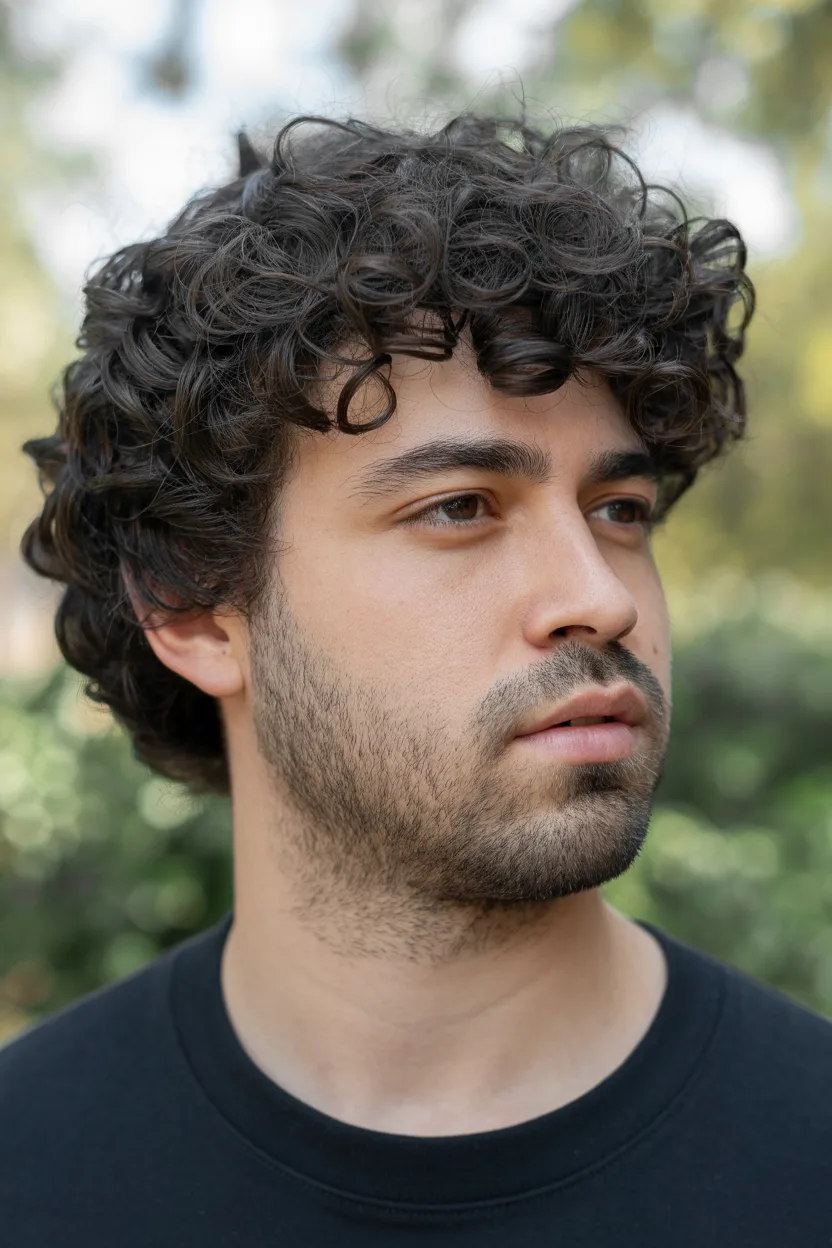
Natural curls grow to a rounded flow of 5 to 7 inches, paired with a tight, boxed beard following the jawline. The beard’s geometry anchors the curls’ exuberance. Use curl cream; skip gel. Face shapes: round, oval. Hair type: curly.
09. Long Layered Flow + Beard Fade
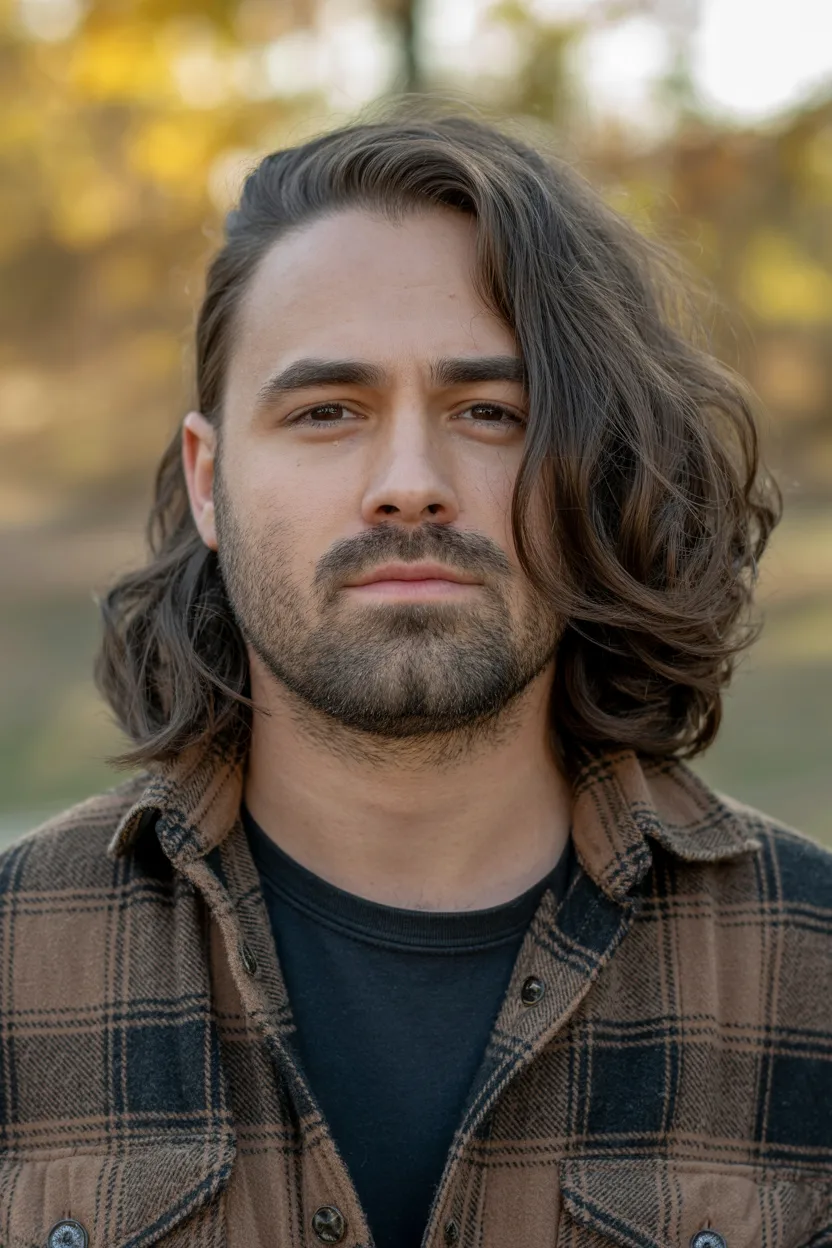
Hair past the collar with face-framing layers, beard fading into sideburns. Layers add movement and prevent flatness. The barber challenge: layers need refreshing every 6 to 8 weeks or the flow loses its shape entirely. Face shapes: heart, oval. Hair types: thick, wavy.
10. Swept-Back Flow + Van Dyke
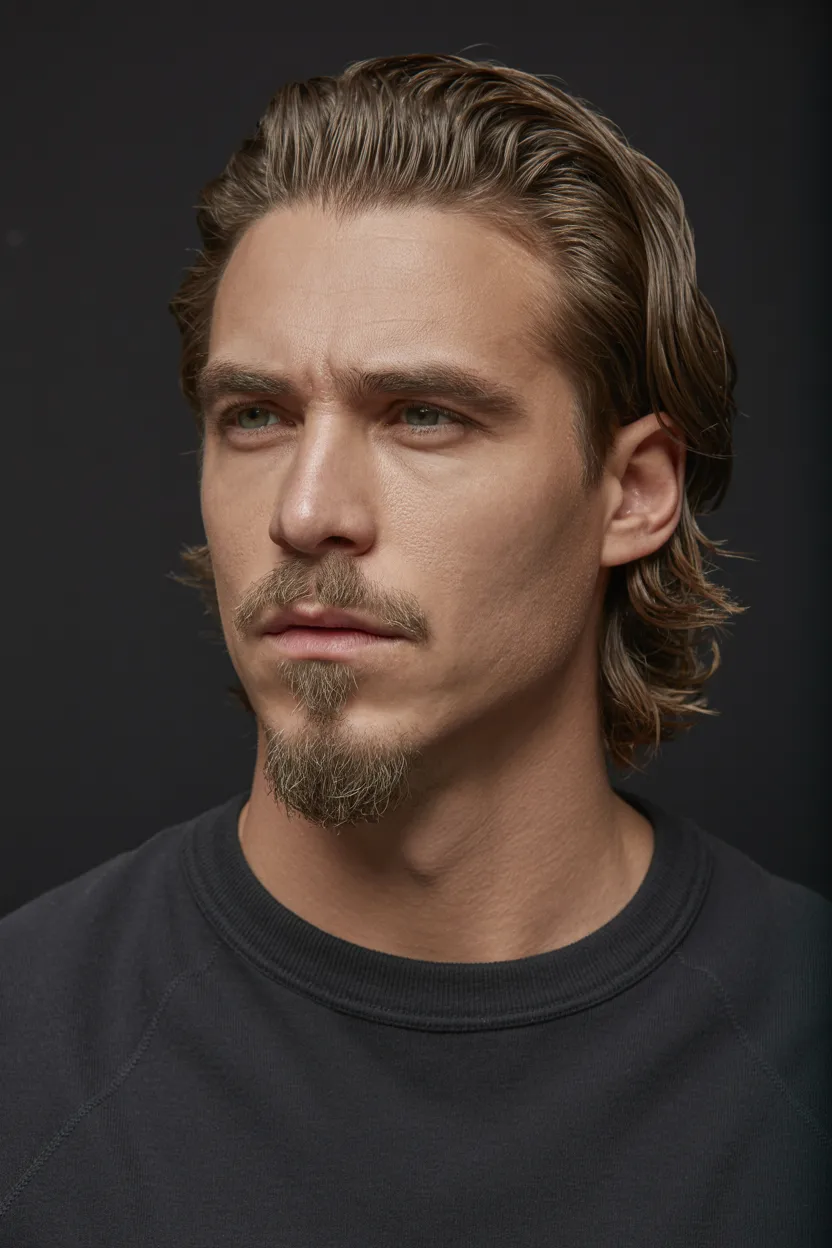
Hair swept naturally backwards, Van Dyke beard (goatee with detached moustache). Requires clean, precise facial hair lines — this one forgives nothing. Best for strong jawlines and defined cheekbones. Face shapes: square, diamond. Hair types: straight, wavy.
11. Messy Flow + Chin Strap (Done Right)

Deliberately undone hair paired with a thin, well-defined chin strap. Works only when the chin strap is architectural — 3 to 4mm wide maximum, flawlessly maintained. One missed shave, and the whole look falls apart. High risk, high reward. Very high maintenance. Face shapes: oval, oblong.
12. Flow with Patchy Beard Strategy

For guys who can’t grow a full beard: focus on where your facial hair actually grows well. A strong moustache plus chin patch is a complete, intentional look. The flow draws attention upward. Don’t fight your genetics — work with them. Works for all face shapes and hair types. low maintenance.
13. Medium Flow + Statement Mustache
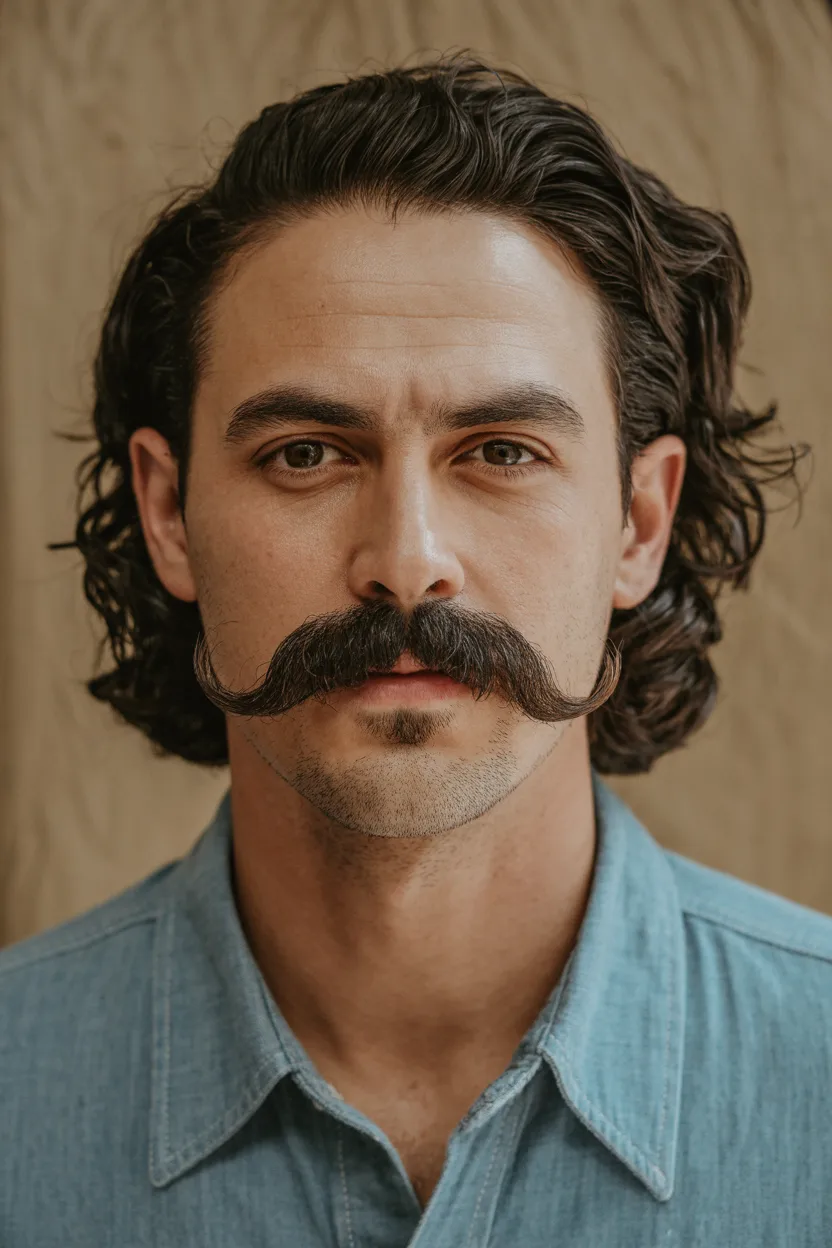
Collar-length hair, minimal other facial hair, and a thick moustache as the centrepiece. Bold and vintage-inflected. Requires confidence. Not recommended as a first flow look — earn this one. Face shapes: oval, square. Hair types: wavy, straight.
14. Shoulder Flow + Handlebar Mustache
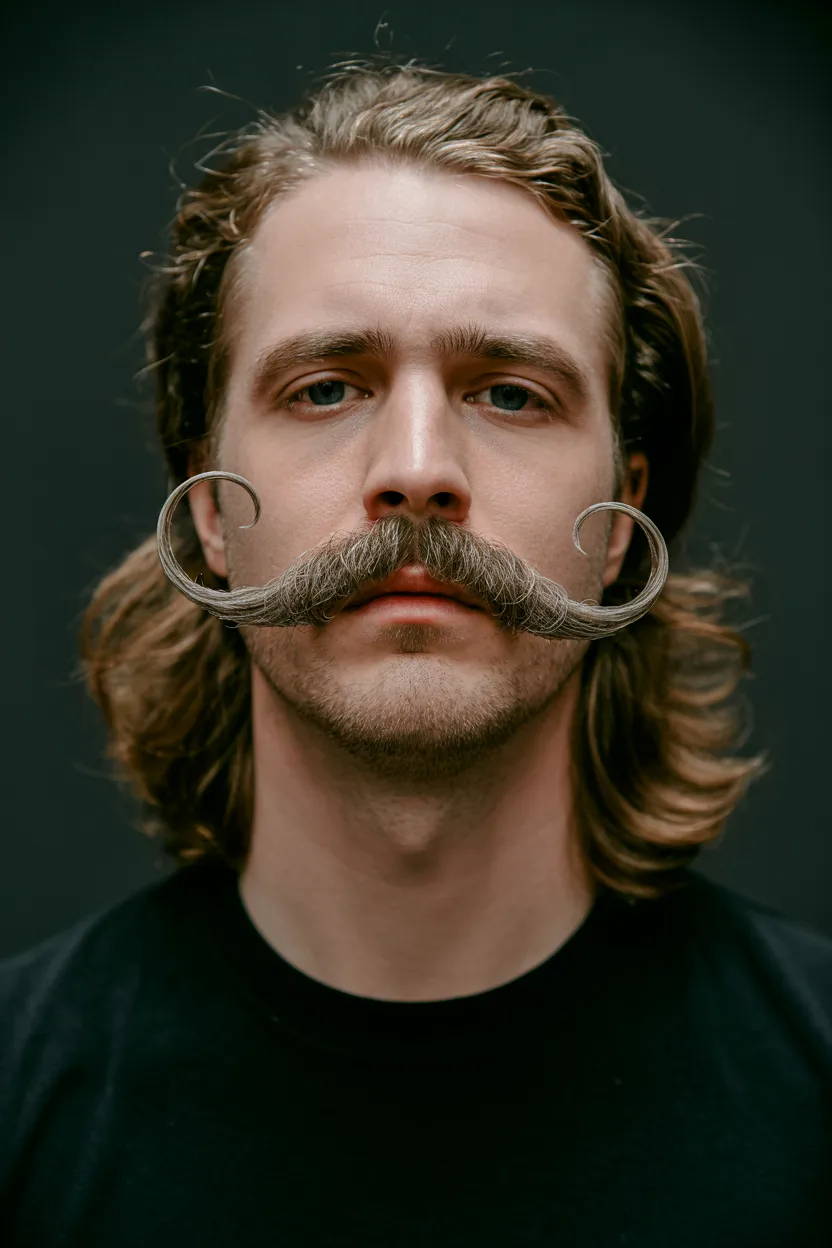
Maximum personality. Shoulder-length layered hair plus a waxed handlebar moustache with minimal other facial hair. The contrast between natural hair and a sculpted moustache is the whole point. Niche, polarising, unforgettable. Very high maintenance. Face shapes: oval, square.
15. Fine Hair Flow + Dense Short Beard
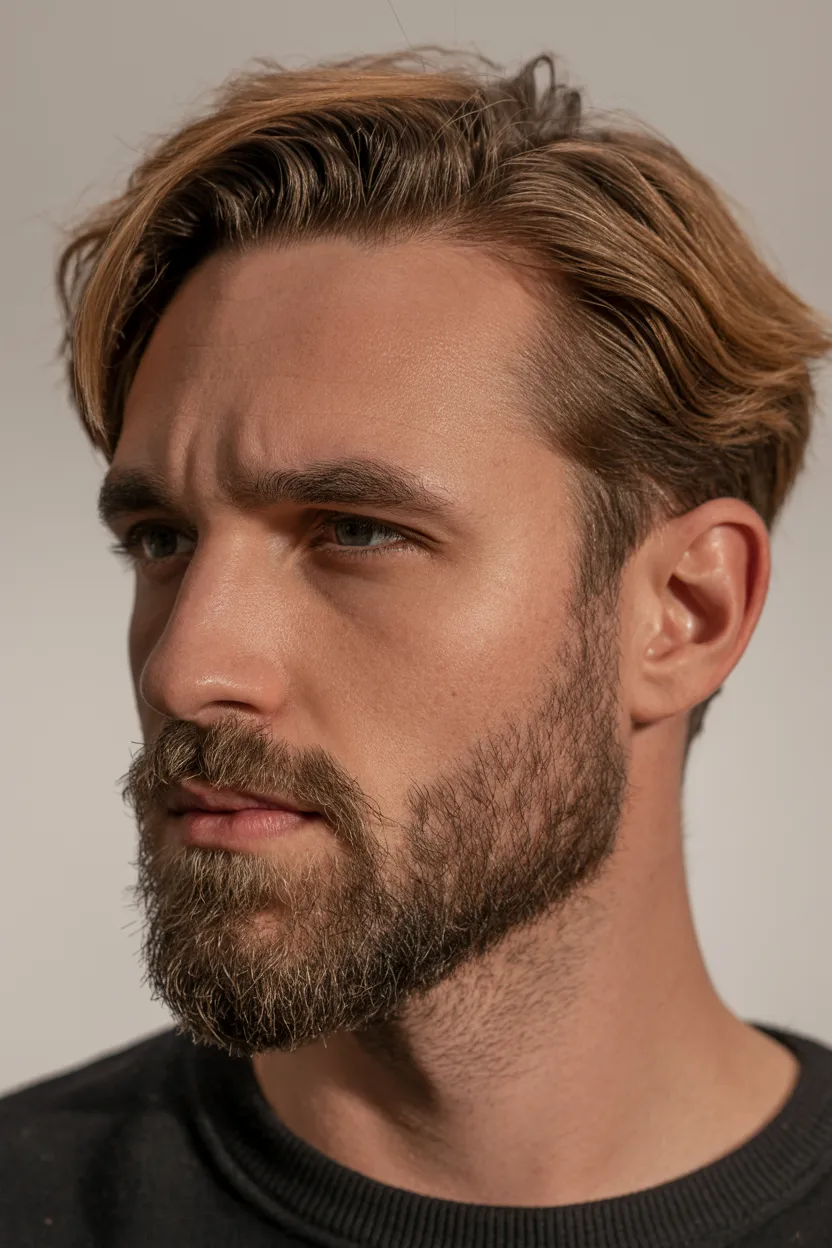
For fine-haired guys: keep the flow at ear-to-collar length and compensate with a denser, well-shaped beard. The beard adds visual weight that your hair can’t. Use dry shampoo for volume on wash days. Works for all face shapes. Medium maintenance.
16. Layered Flow + Precision Beard Lines
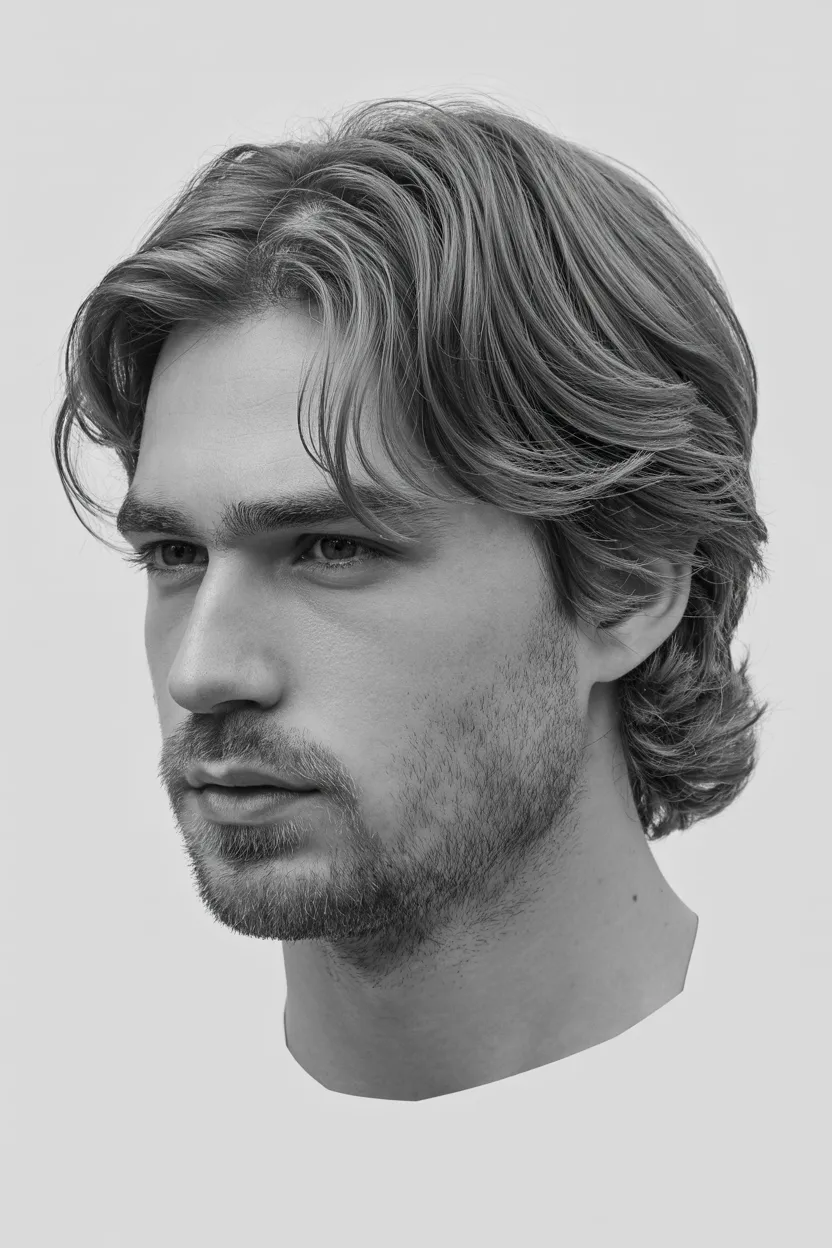
Subtle layers for movement in the hair and beard, with laser-precise cheek and neckline. The juxtaposition of textured hair and geometric beard lines creates sophisticated visual tension. Works well in professional settings. Face shapes: oval, diamond. Works with all hair types.
17. Flow with Fade Sides + Full Beard
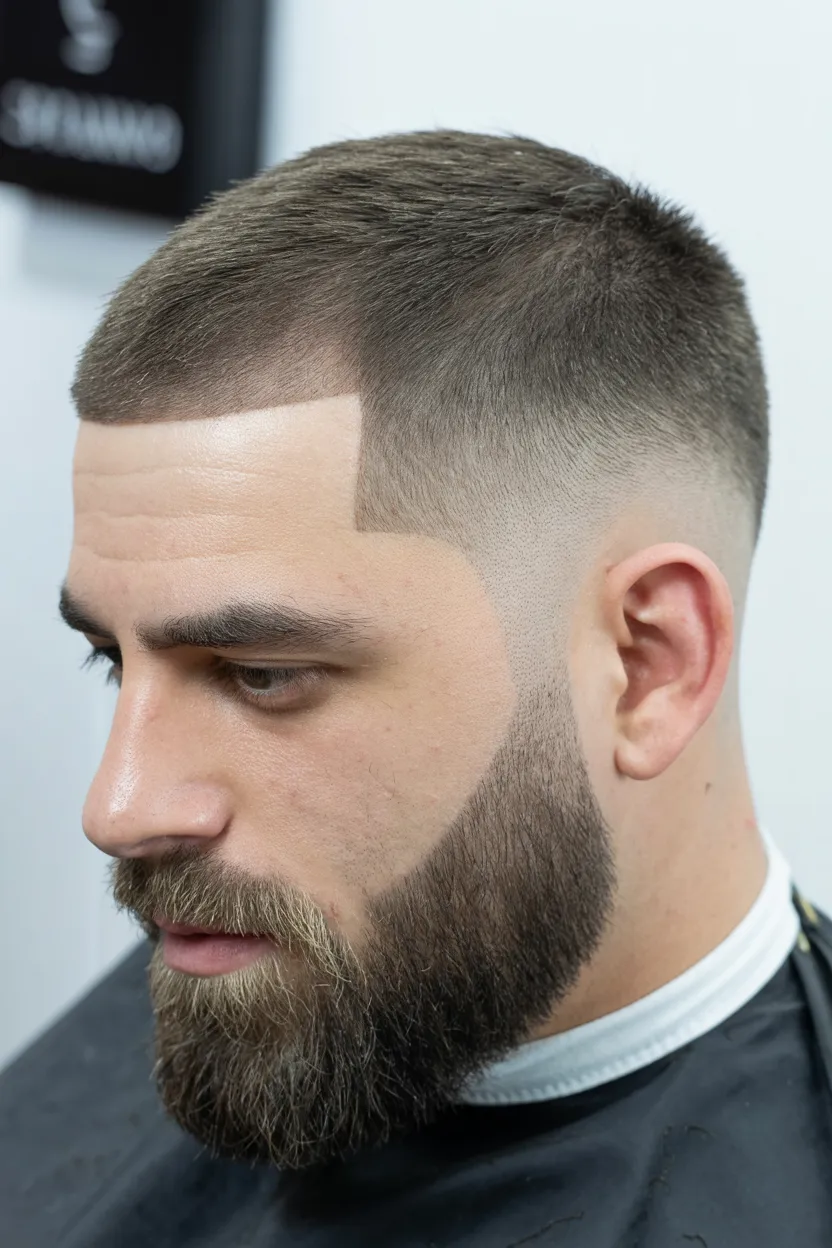
A modern hybrid: the top and back flow freely, but the sides are faded (low to mid). Reduces bulk on wider faces and adds a cleaner finish. Pairs best with a full, well-groomed beard. Very barber-friendly — easy to describe and replicate. Face shapes: round, square. Hair types: thick, wavy.
18. Natural Flow + Minimalist Chin Patch

Completely unstyled hair, just a small, well-defined patch of hair at the chin. The ultimate in subtle masculinity. Near-zero maintenance. Works for all face shapes and hair types. Particularly effective for younger guys or anyone who prefers an understated style.
19. Windswept Flow + Short Full Beard
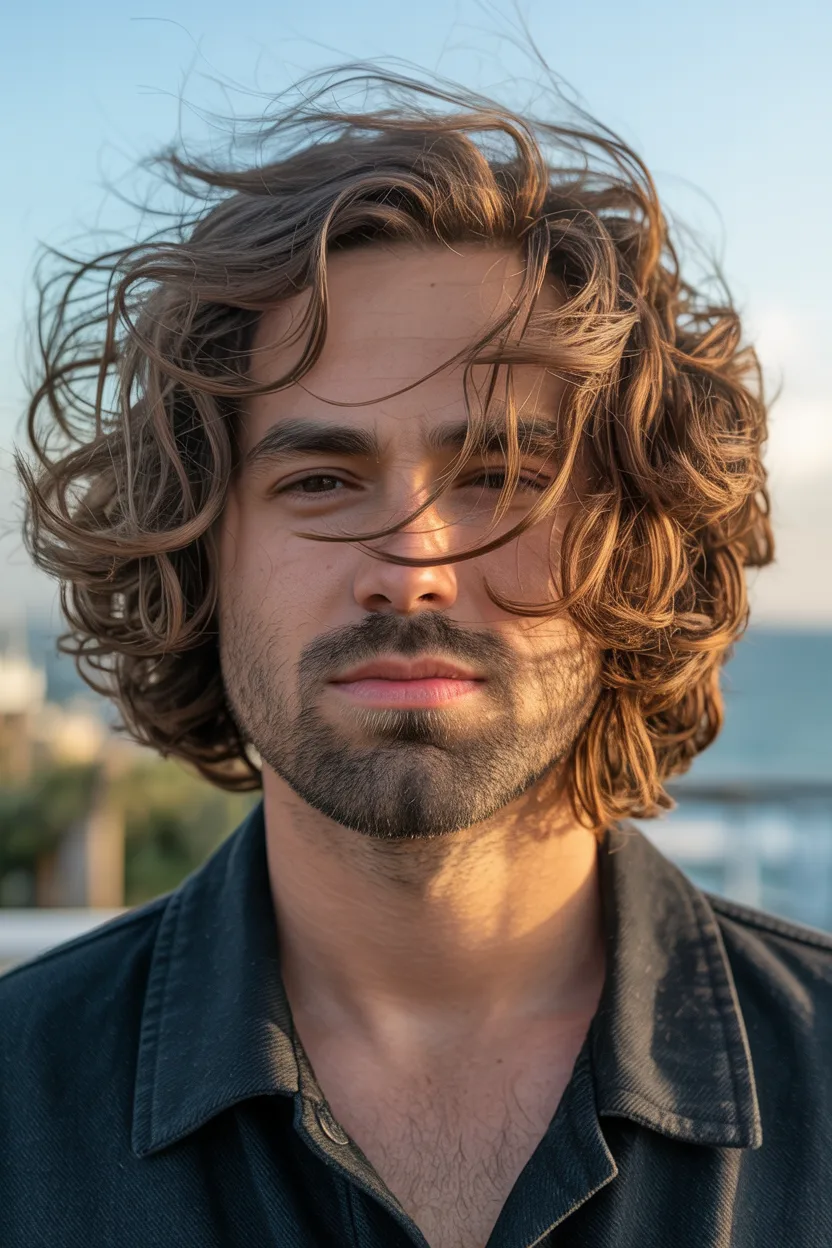
Hair styled to appear wind-blown — slightly directional, naturally dried. The beard was kept at a uniform 10 to 15mm. A surfer-meets-city-professional look that photographs extremely well. Sea salt spray is essential. Face shapes: oval, heart. Hair types: wavy, curly.
20. Hockey Flow + Faded Full Beard
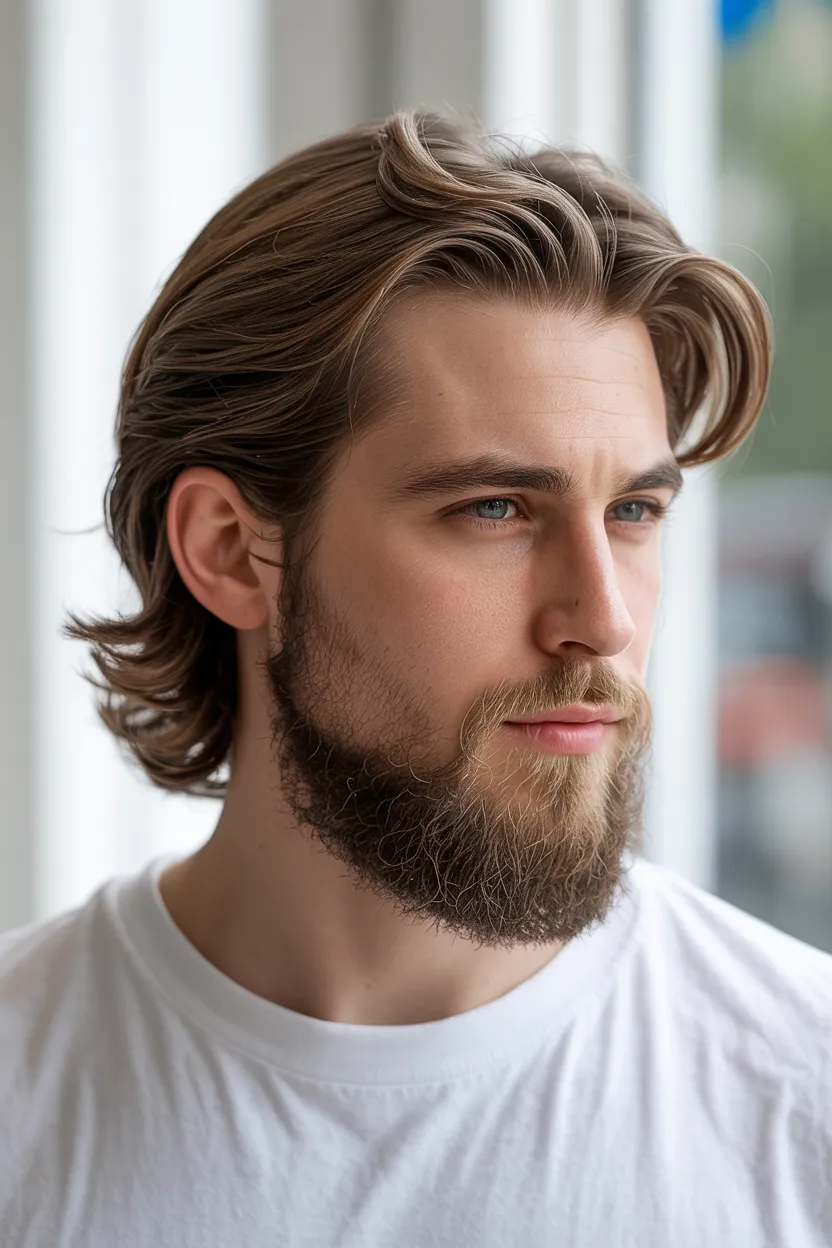
The evolved classic. Traditional hockey flow with a full beard that fades smoothly into the sideburns — not a hard line, a gradient. The most requested looks at vA3pCBgrooming salons in 2025 and 2026. Works for almost every face shape and hair type. Medium maintenance.
| Product Picks by Style Category |
|---|
You don’t need 12 products. You need the right one or two. For the hair: Sea salt spray is best for windswept, wavy, and textured flows. It enhances natural texture and movement without weight. Apply to damp hair and let it air dry—the workhorse product of the flow world. Curl cream or defining cream is best for curly flows. It defines curls without the crunch of gel. Apply to wet hair, scrunch upward, and don’t touch until dry. Crucial for curly flows. Lightweight water-based pomade is best for slicked-back, centre-parted, and swept styles. A pea-sized amount on dry hair gives control without stiffness. Avoid oil-based pomades — they flatten the flow. Dry shampoo is best for fine hair and between-wash days. It adds volume and absorbs oil. Apply at the roots, let it sit 60 seconds, then work it in. Extends the life of a good hair day by about 24 hours. For the beard: Beard oil is non-negotiable for beards over 5mm. It eliminates itch, softens coarse hair, and prevents flaking. Apply to a clean beard — 2 to 4 drops daily. Every beard style benefits from this. Beard balm combines conditioning and light hold. Better than oil alone for beards over three-quarters of an inch because it adds shape. Warm it between your palms before applying. A precision trimmer is essential for stubble, goatees, and defined lines. Use a foil shaver for clean lines and a standard trimmer for length — two tools, not one. The cheek line and neckline make or break every beard style. A boar bristle beard brush distributes oil, trains hairs in the right direction, and removes debris. Five passes per day. This is the most underrated step in beard maintenance. |
Exactly What to Say to Your Barber
Most guys describe what they want poorly, and most barbers have to guess. Here are three scripts you can use verbatim.
If you’re starting from short hair: “I’m growing a flow haircut — I want to keep the shape clean while I grow it out. Can you trim the dead ends and any split ends, keep everything even, but don’t take any length off the top or sides? I also want to discuss a beard shape that works with my face for when my hair gets longer.”
If your hair is already at flow length: “I want a flow haircut with layers for movement. Keep the length — don’t take more than half an inch off — but add some texture so it doesn’t lie flat. I want it to have natural movement without product. For the beard, can you set the lines — cheek line and neckline — and we’ll discuss the length?”
For the beard specifically: “I want my beard to look intentional, not overgrown. Can you set a clean neckline about two finger-widths above my Adam’s apple, clean up my cheek lines while keeping them natural — not too high — and trim everything to [X] millimetres? I want to leave here knowing exactly how to maintain this at home.”
Your Maintenance Schedule
Daily (5 minutes): Apply your hair product of choice while damp or on day-two hair. Apply beard oil — 2 to 4 drops, worked in thoroughly. Brush or comb the beard into shape. That’s it.
Weekly (10–15 minutes): Wash your beard with a beard wash or a mild shampoo — not regular body soap, which strips too much oil. Trim any stray hairs that cross your cheek lines. Re-evaluate your neckline: if you can feel beard hair approaching your collarbone, it’s time to clean it up.
Every 4–6 weeks: Visit your barber. For a growing flow, trim to remove split ends and maintain shape. For an established flow, a light trim of the length, plus a professional beard line-up. This is the visit that keeps everything looking intentional.
Every 6–8 weeks: If you have layers in your flow, they need refreshing at this cadence, or they grow out and lose their movement—also a good time to re-evaluate whether your current beard style still works with the increased hair length.
5 Mistakes That Will Ruin Your Flow + Beard Look
Mistake 1: Setting your neckline too high
The most common beard mistake. The neckline should sit about two finger-widths above your Adam’s apple — not at the jawline. Too high, and the beard looks like a chinstrap regardless of the style. Nail this one thing and every beard style immediately improves.
Mistake 2: Giving up during the awkward phase
There’s an uncomfortable 3- to 5-month growth stage — around the jaw and ear level — where most guys quit. Push through it. This is the phase where keeping the beard well-defined matters most, because it’s the only variable you can control while the hair catches up.
Mistake 3: Washing your hair too often. long hair needs its natural oils. Washing daily strips moisture, making hair look frizzy and dull. Most flow styles look best on day two or day three hair. Dry shampoo handles freshness; full washes two to three times per week is the right cadence.
Mistake 4: Matching the intensity of both elements
Wild hair plus wild beard equals visual chaos. One element leads; the other supports. This is the Golden Rule applied to your actual morning routine.
Mistake 5: Using the wrong product for your hair type
Gel makes flows crunchy and static — avoid it. Heavy pomades flatten flows. The right products are light: sea salt sprays, texturising creams, and lightweight balms. If your hair looks “done,” you’ve used too much or the wrong thing.
FAQs
Hair grows roughly half an inch per month on average. From a short cut (1 to 2 inches), expect 10 to 14 months to reach a true collar-length flow. For medium length (3 to 4 inches), you’re looking at 4 to 6 months. Patience during the awkward middle phase is the real test.
Yes — with the right combination. The ear-length flow with designer stubble or a precision goatee is office-appropriate in virtually any industry, except in ultra-conservative environments. The key is that your beard must be visibly maintained. Unkempt facial hair reads as unprofessional; a well-lined beard with natural hair reads as style-conscious.
Work with it. Identify where your facial hair grows densely — typically the moustache, chin, and cheeks near the jaw — and build a style around those zones. A strong moustache-and-chin combination is a complete, intentional look. The flow haircut naturally draws attention upward, which makes a patchy beard far less noticeable than it would be with a shorter haircut.
Always work with your current hair length. If you’re in the growing-out phase, focus on getting the beard right first — it’s the element you can actually control. Once the hair reaches flow length, then dial in the two elements together with your barber.
Absolutely — with some adjustments. Grey or salt-and-pepper flows are genuinely distinguished. The key is to keep everything well-maintained and to lean into cleaner shapes rather than wild or voluminous styles. A collar-length flow with a neat full beard or goatee is an age-defying combination at any decade.
Ready to commit to the flow? Take a screenshot of the face shape section, pick your combination from the 20 styles above, and bring the barber script to your next appointment.
Final Thoughts
The flow haircut with beard is not a trend — it is a long-standing combination that keeps coming back because it genuinely works. But effortless is a lie in the best possible way. Every guy you have seen rocking a perfect flow with a clean beard has a routine, knows his face shape, and knows exactly what to ask his barber. The look appears casual because the groundwork is solid, not because there is no groundwork at all.
Start simple, be patient, and use the face shape table and barber scripts in this guide to remove the guesswork. If you are new to this, the ear-length flow with designer stubble is your entry point — low maintenance and universally flattering. Build from there—more length, more beard definition, more personal style layered in over time. The guys who stick with it through the awkward growth phase are the ones who end up with a look that feels completely and authentically their own. Now book the appointment.


- Be Respectful
- Stay Relevant
- Stay Positive
- True Feedback
- Encourage Discussion
- Avoid Spamming
- No Fake News
- Don't Copy-Paste
- No Personal Attacks
- Be Respectful
- Stay Relevant
- Stay Positive
- True Feedback
- Encourage Discussion
- Avoid Spamming
- No Fake News
- Don't Copy-Paste
- No Personal Attacks
