19 Real Flannel Outfit Ideas Men Will Use (How to Actually Wear a Flannel Shirt)
Published: June 2, 2026
Here’s what nobody tells you: flannel is not a fall shirt. It’s not a “lumberjack thing.” And it’s definitely not just for throwing over a tee when you couldn’t think of anything else.
Flannel might be the single most adaptable piece in a man’s wardrobe. It can dress up, dress down, layer under a suit jacket, or anchor a full streetwear look. The problem isn’t flannel — it’s that most men never learn to use it right. They either go full Camp Counselor or try so hard to “elevate” it that it stops looking natural.
This guide fixes that. You’ll get 25 outfit ideas built around real situations — not abstract style concepts — organized by season, occasion, and the body type they actually flatter. Each idea includes what to wear, what to avoid, and one small detail that makes the difference.
BEFORE YOU DRESS: THE THREE FLANNEL RULES THAT CHANGE EVERYTHING
Rule 1 — Fit changes the whole message. A slim-fit flannel says “intentional.” An oversized flannel says “relaxed confidence.” A baggy flannel that’s too long says “borrowed it from someone.” Know which one you’re going for before you leave the house.
Rule 2 — Flannel is always the loudest piece in the room. Plaid is a statement pattern. If you wear a bold flannel, keep everything else quiet — solid colors, clean shoes, minimal accessories. The shirt is doing the talking.
Rule 3 — Weight matters seasonally. Lightweight flannel (around 4 oz fabric) is for spring and early fall layering. Midweight (5–6 oz) is your sweet spot for most of the year. Heavy flannel (7 oz+) is essentially a jacket and should be styled like one.
| SECTION 1: CASUAL EVERYDAY LOOKS (For When You Just Want to Look Good Without Trying) |
|---|
1. The White Tee Foundation What: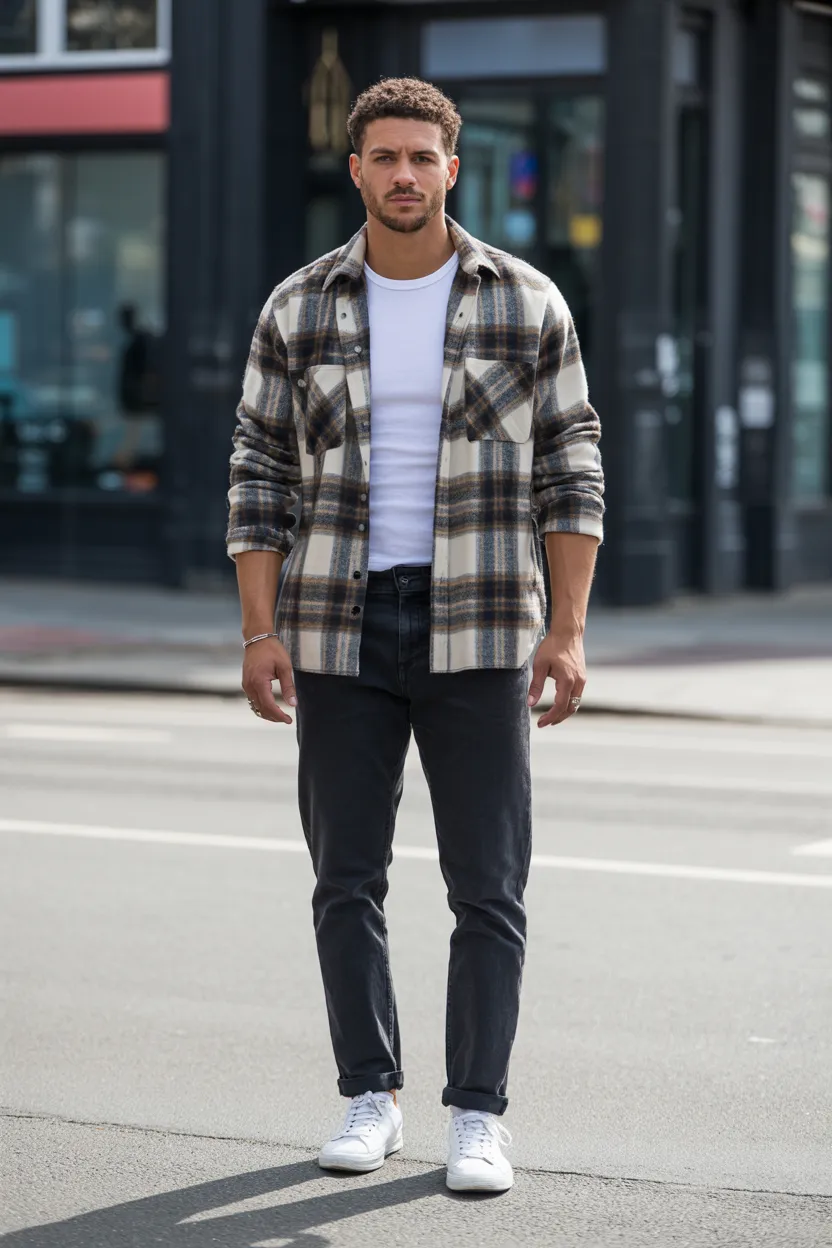 Open flannel over a fitted white crew-neck tee, dark straight-leg jeans, white low-top sneakers. Why it works: White neutralizes any flannel color. The open shirt creates a relaxed, layered look without bulk. This is the most universally flattering flannel combination. The detail that matters: Fold the cuffs back twice — it shows intentionality and balances the proportions if the shirt runs long. Who it’s best for: Everybody type, especially useful if you’re tall and lanky, since the layers add visual weight. Avoid: Graphic tees if your flannel already has a loud pattern. 2. Flannel Over a Hoodie What: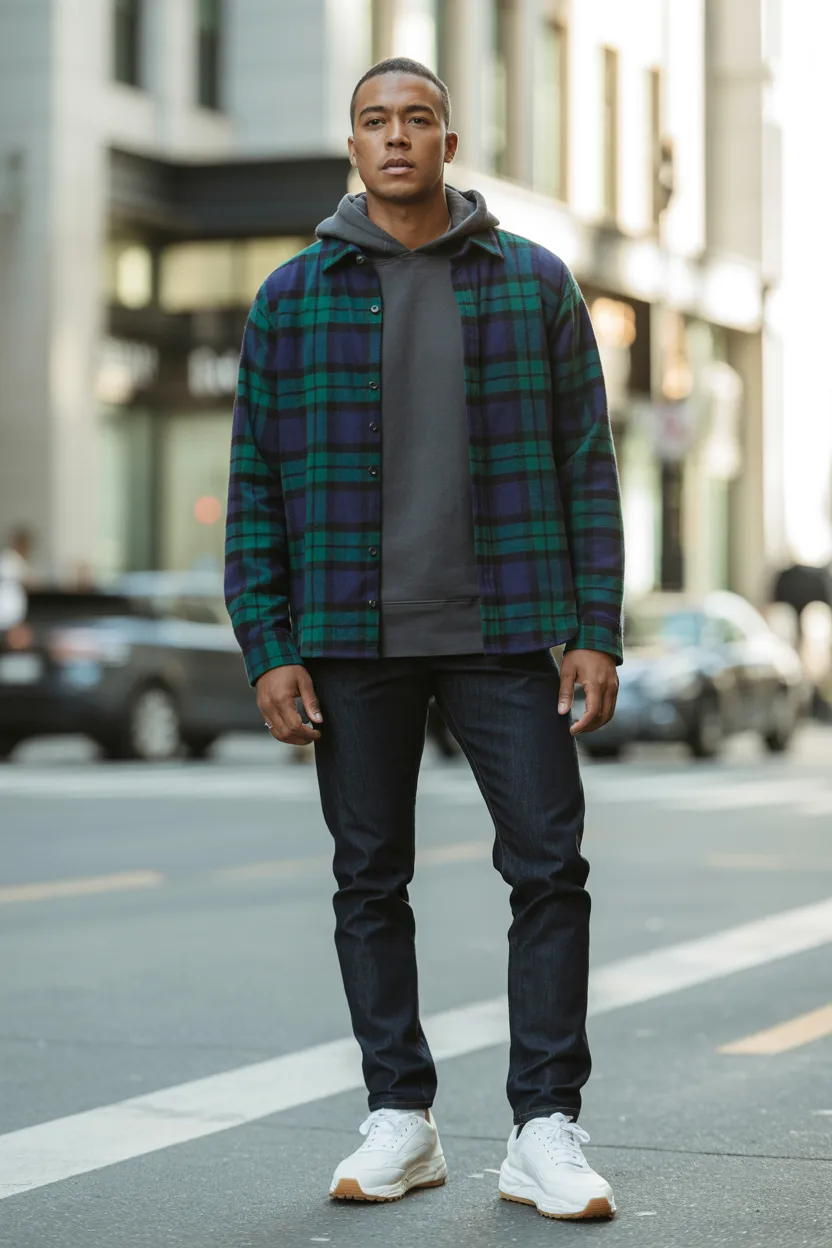 Fitted flannel (buttoned two buttons at most) over a solid crewneck hoodie, slim dark jeans, chunky sneakers like Air Force 1s. Why it works: The flannel acts as a second layer without the bulk of a jacket. The texture contrast between the flannel weave and the hoodie fabric looks intentional. The detail that matters: Keep the hoodie one shade darker than the flannel to create depth. Who it’s best for: Guys with a broader build — the outer flannel layer creates vertical lines that slim the silhouette. Avoid: Hoodie strings hanging out, hood bunched at the back. 3. Flannel With Cargo Pants What: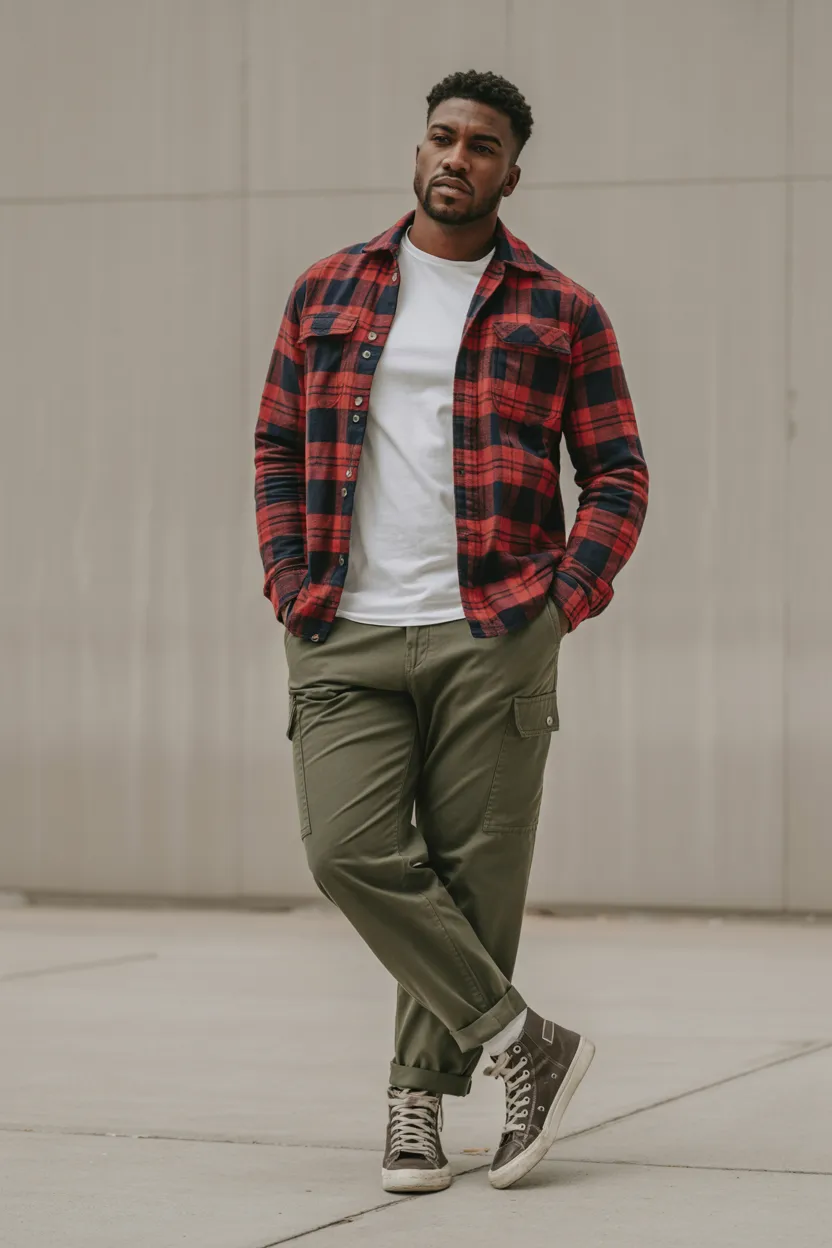 Half-tucked flannel (front only), olive or black cargo pants, clean white tee underneath, high-top sneakers or boots. Why it works: Cargo pants and flannel share the same workwear DNA. They make sense together. The half-tuck breaks up the torso and keeps things from looking sloppy. The detail that matters: Roll the cargos once at the ankle if they’re a straight cut — it cleans up the bottom of the outfit. Who it’s best for: Average to slim builds. Carries weight beautifully, but avoid on thicker builds unless the flannel is unbuttoned and worn open. 4. Open Flannel Over a Graphic Tee What: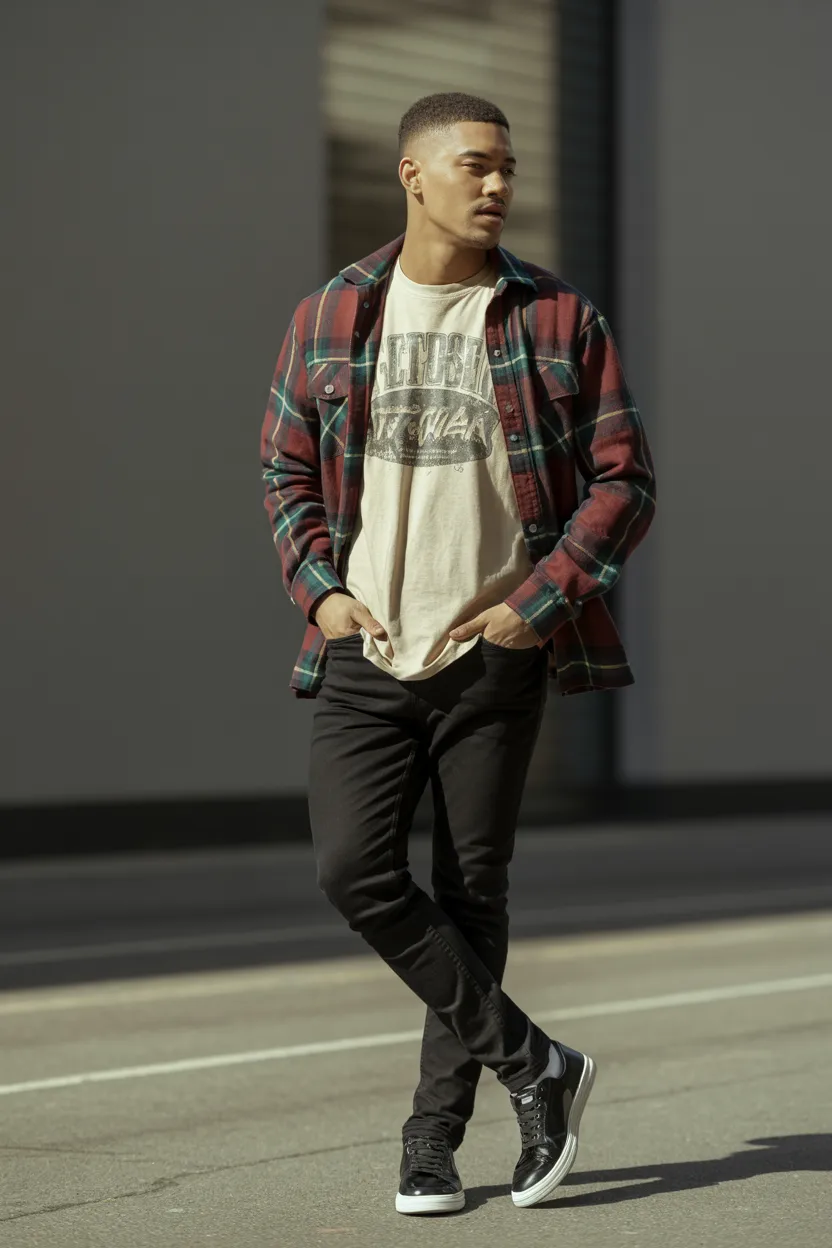 Colorful flannel worn open, graphic tee, slim black jeans, white or black sneakers. Why it works: This streetwear-adjacent look works because the flannel frames the graphic tee rather than competing with it. The detail that matters: Pick up one color from the graphic tee that exists in the flannel plaid. That one visual connection makes the outfit feel considered, not thrown together. Who it’s best for: Younger guys and anyone comfortable with a louder, layered look. Avoid: Two competing graphic elements — the logo on the flannel plus a busy graphic tee is too much. 5. Flannel Tied at the Waist What: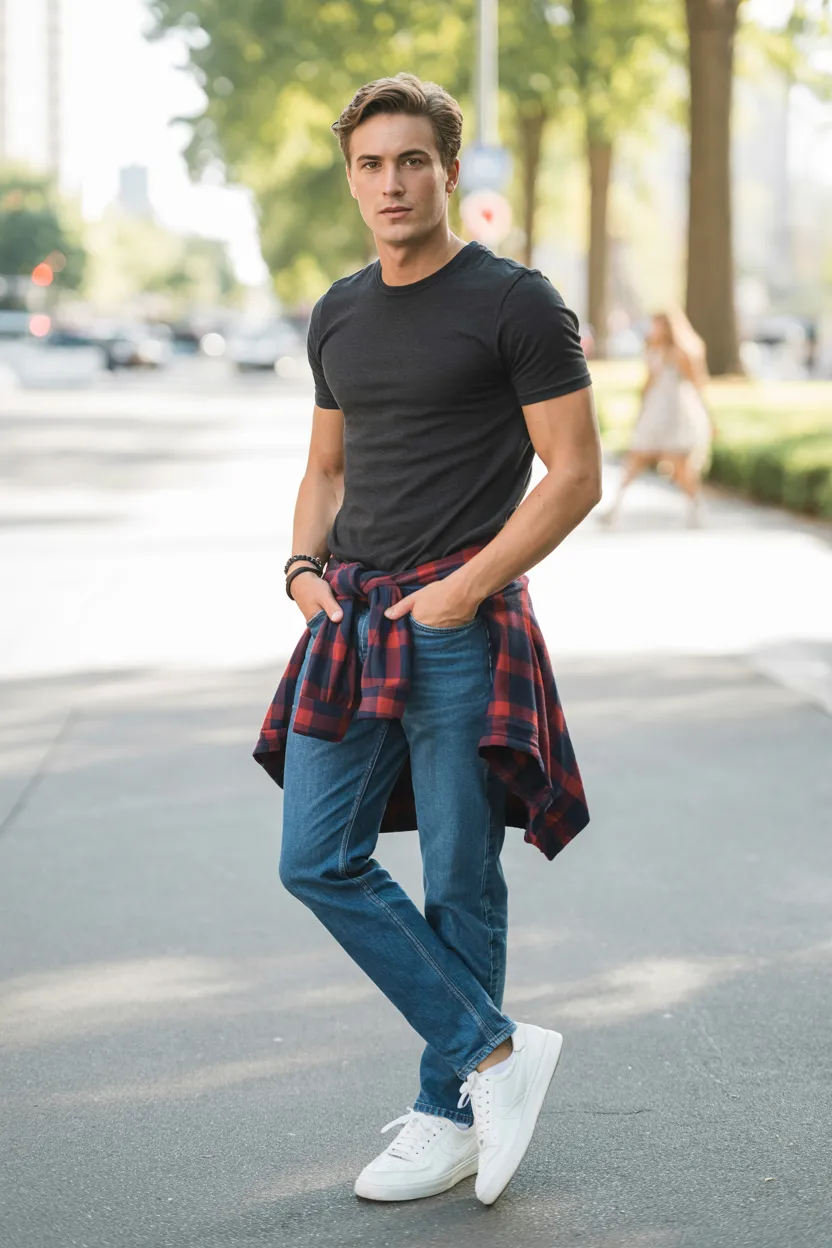 Simple white or black tee, flannel tied around the waist, straight jeans, clean sneakers. Why it works: This is the “backup plan” look that also functions as a style choice. The tied flannel adds pattern and visual interest at the hip level without being worn. The detail that matters: Tie it tightly enough to stay in place, but leave the sleeves hanging naturally, not stuffed into the knot. Who it’s best for: Slim and average builds. On broader builds, the extra fabric at the waist can add unwanted visual width. |
| SECTION 2: SMART CASUAL LOOKS (When You Need to Look Good but Don’t Want to Look Like You Tried) |
|---|
6. Flannel Tucked Into Chinos What: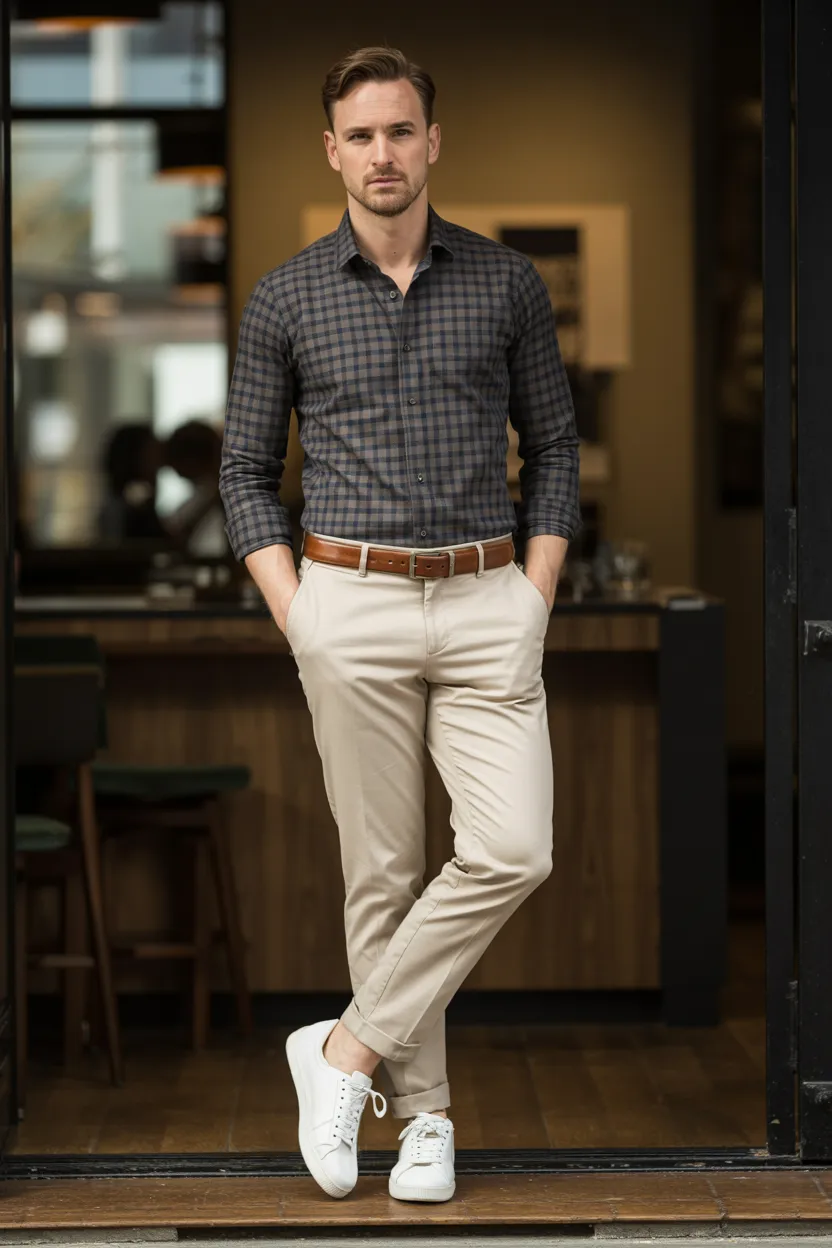 Slim-cut flannel fully tucked into well-fitted chinos, leather belt, loafers or clean white sneakers, sleeves rolled to the forearm. Why it works: The tuck instantly transforms the flannel from casual to smart-casual. It shifts the visual weight upward and makes the look more polished. The detail that matters: The flannel must be slim enough to tuck without creating visible bulk around the waist. If it bunches, go half-tuck instead. Who it’s best for: Guys with a longer torso — the tuck shows off the waistline rather than hiding it. Best occasions: Casual Fridays, first dates, dinner with friends. 7. Flannel With Dark Trousers What: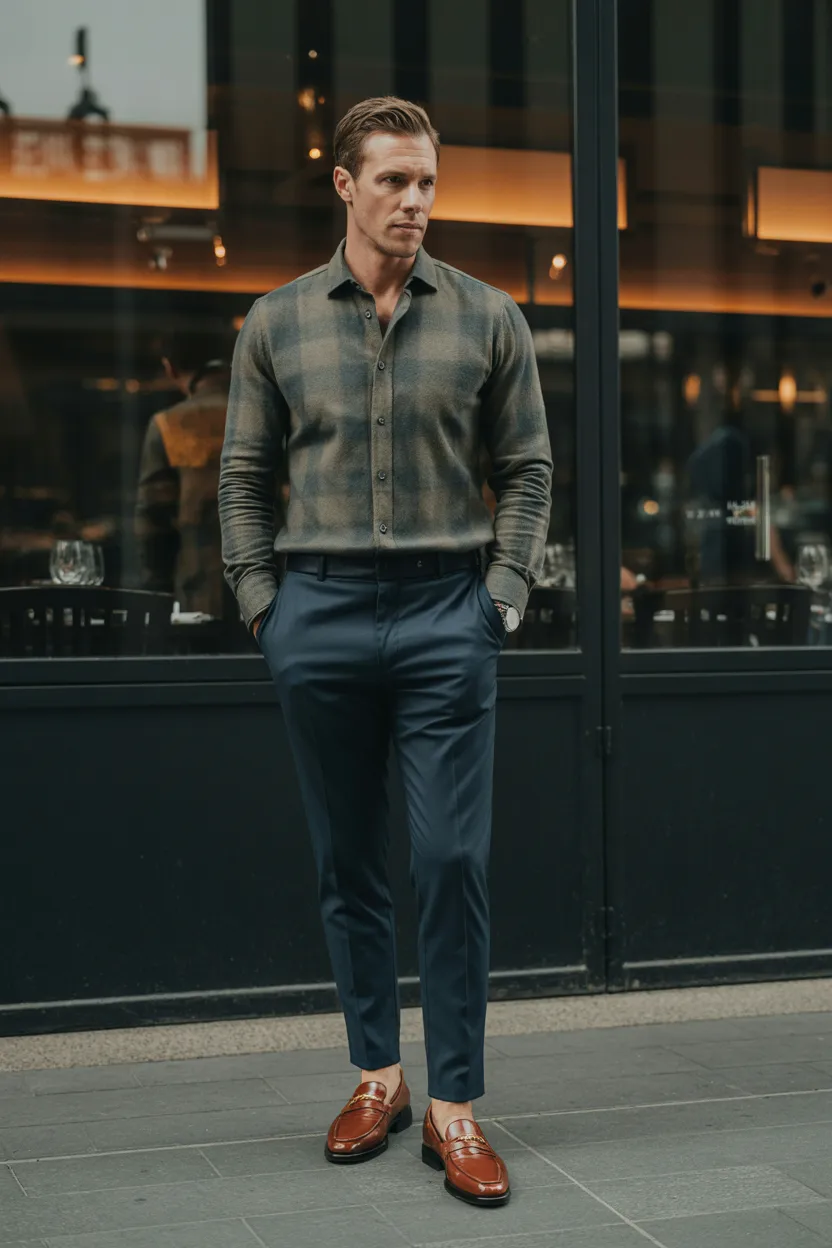 Fitted flannel (buttoned fully) worn with slim wool or ponte trousers, leather loafers or Chelsea boots, no accessories. Why it works: Dark tailored trousers are doing the heavy lifting here. The contrast between the relaxed top and the refined bottom is the look. The detail that matters: The flannel must be solid or very subdued plaid — a bright red-and-black flannel won’t work here. Muted tones only. Who it’s best for: Men who want to wear a flannel to the office or a dinner setting without it reading as too casual. 8. Flannel Under a Blazer What: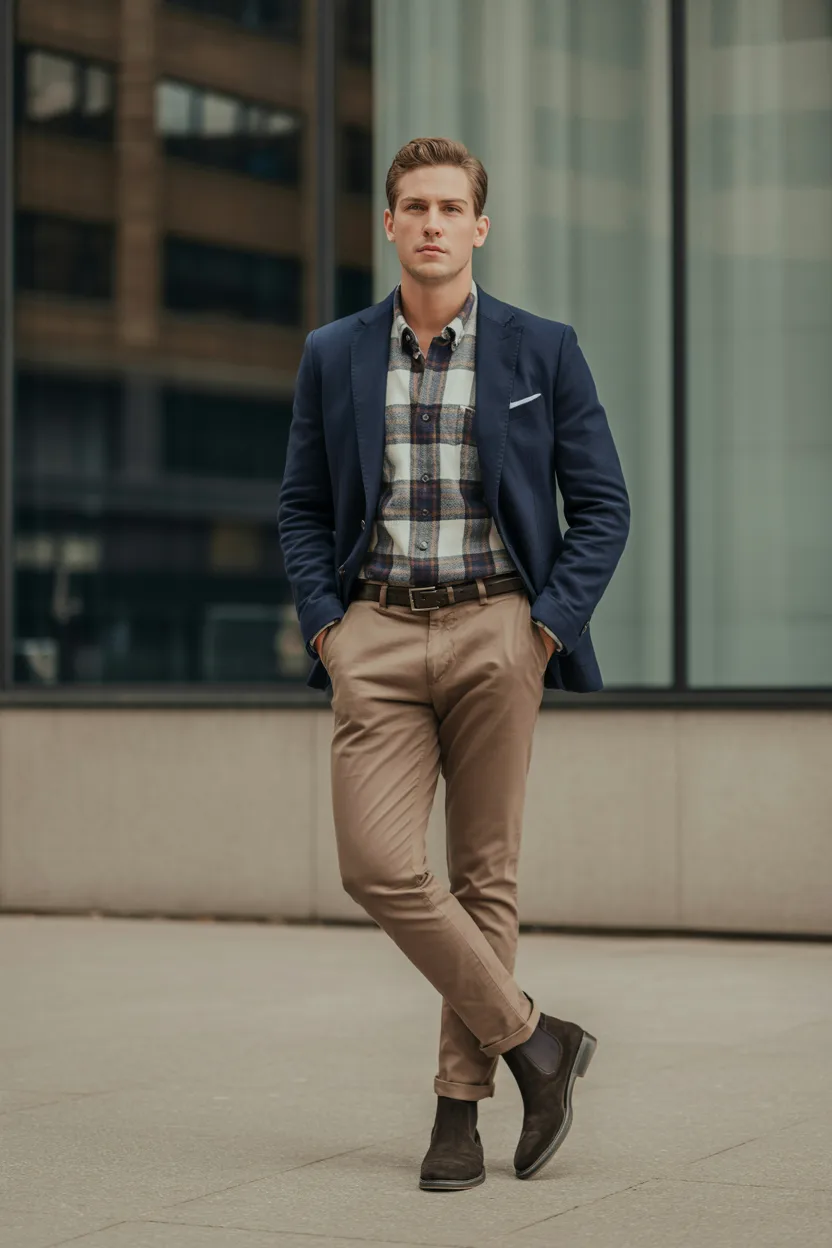 Solid or simple plaid flannel (tucked), slim chinos or dark trousers, structured blazer, Chelsea boots. Why it works: This is the “unexpected texture” play. Flannel under a blazer reads as fashion-aware rather than accidental when the fit is right. The detail that matters: The flannel collar should sit cleanly inside the blazer lapel, not bunched or folded. A button-down collar flannel works better here than a spread collar. Who it’s best for: Confident dressers who want to push the smart-casual boundary. Avoid: A patterned blazer — one structured pattern at a time. 9. Flannel With a Turtleneck What: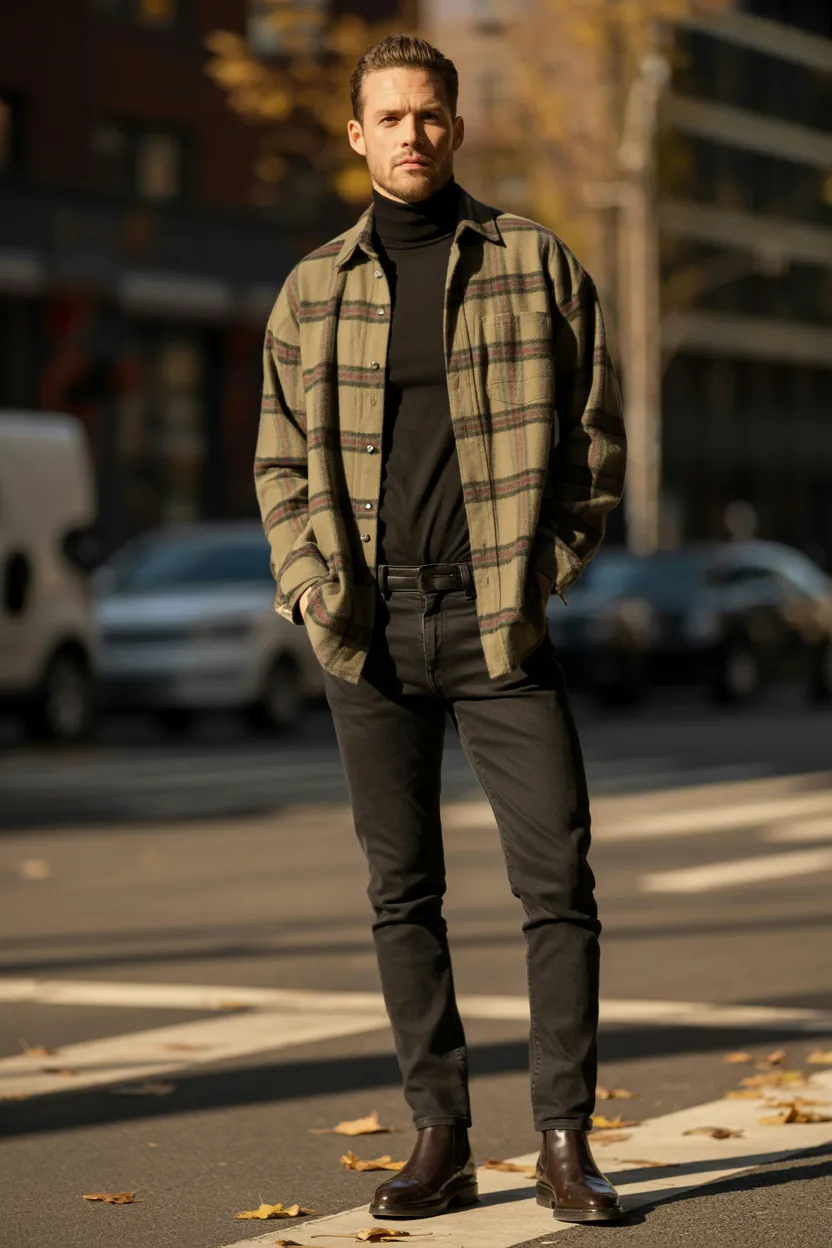 Open flannel layered over a fitted black or white turtleneck, dark straight- or slim-leg jeans, and Chelsea boots. Why it works: The turtleneck elevates the neckline and adds sophistication. The open flannel provides warmth, color, and pattern without competing with the clean lines of the turtleneck. The detail that matters: Go for a truly fitted turtleneck — a loose one creates too much volume under the flannel and makes the neck area look cluttered. Who it’s best for: Slim to average builds, men who want a fashion-forward look without trying too hard. |
10. Flannel Under a Denim Jacket What:
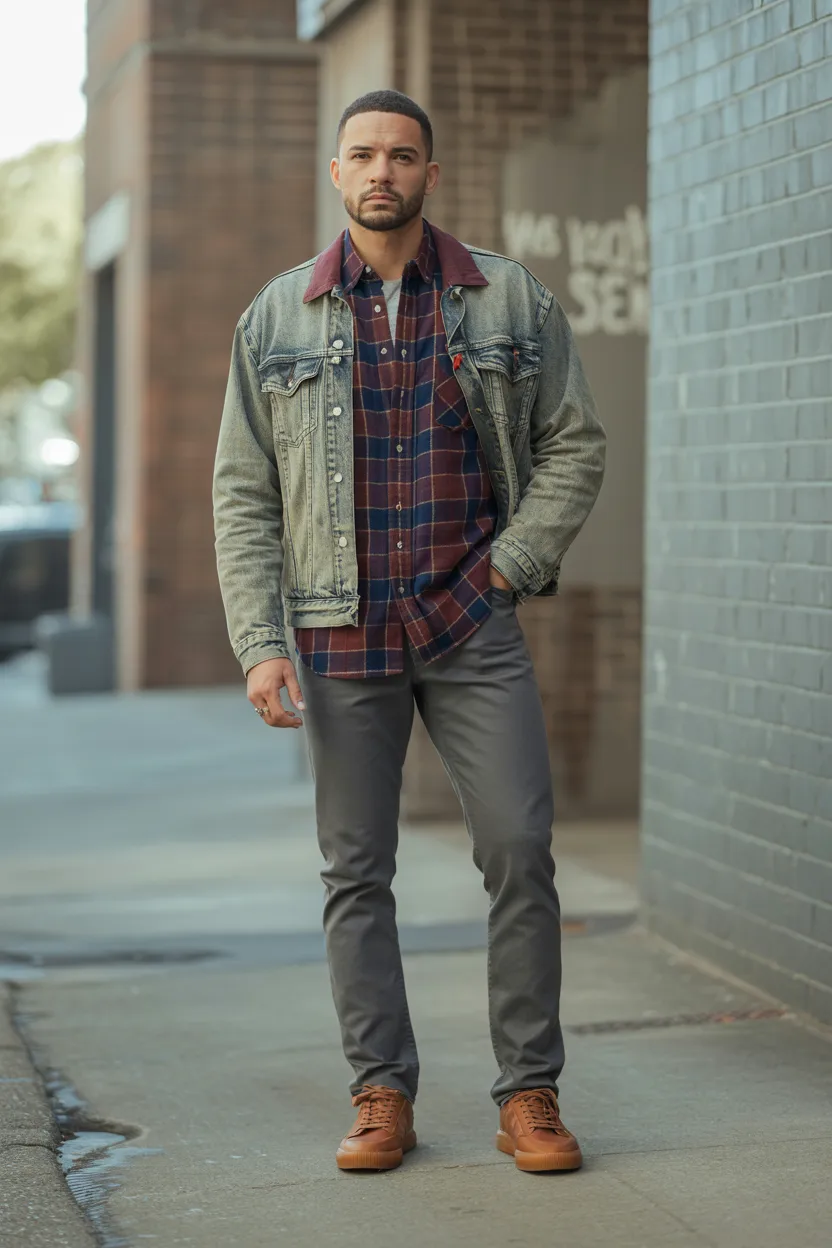
Thin flannel shirt under a denim jacket, straight or slim jeans, boots or leather sneakers. Why it works: This is double-denim done right. The flannel adds warmth and a pop of color inside the jacket. Wear it open on the denim jacket so the flannel is visible at the chest. The detail that matters: Keep denim jacket and jeans in different washes — never match denim on denim. Light jacket with dark jeans, or vice versa. Who it’s best for: Everybody—one of the most universally wearable combinations in this list.
11. Flannel Under a Leather Jacket What:
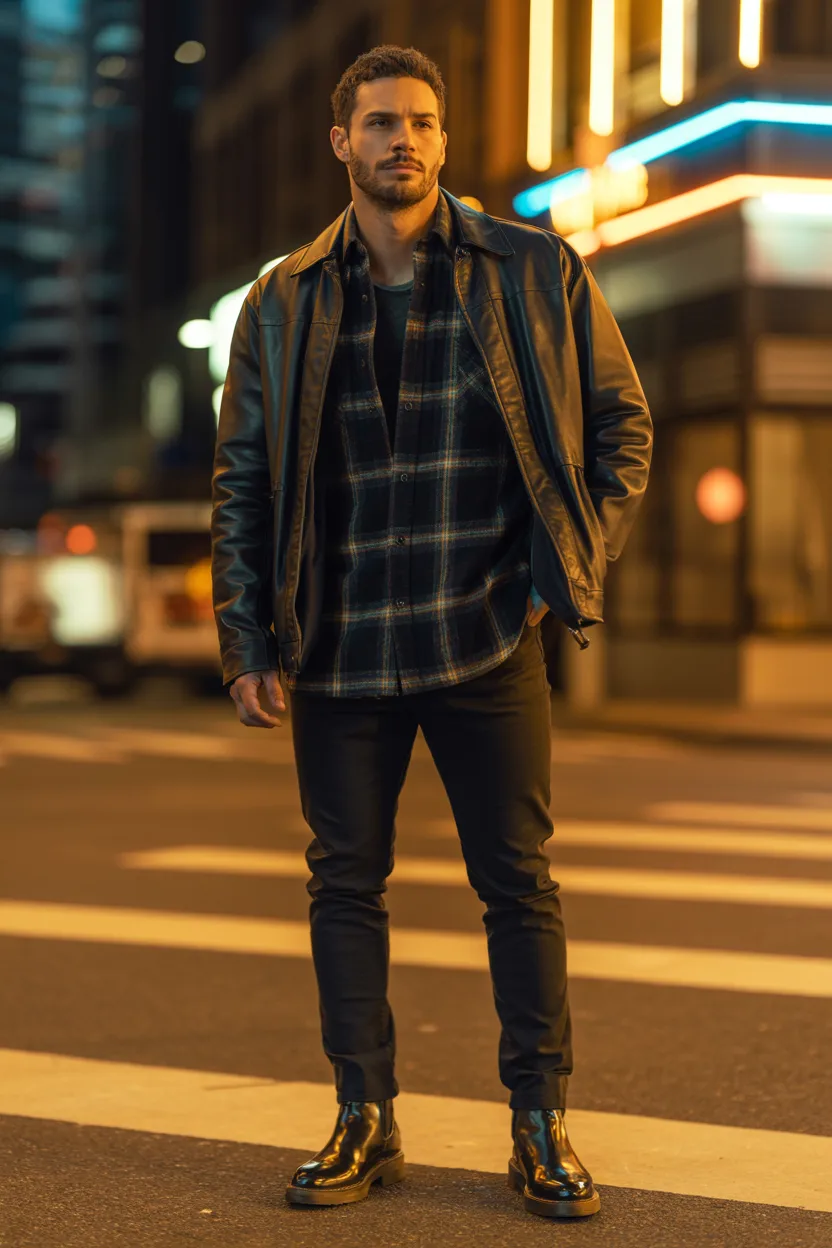
Darker flannel under a black or brown leather jacket, slim black jeans, Chelsea boots, or high-top sneakers. Why it works: The softness of flannel against the hard edge of leather creates a contrast that looks genuinely cool — rugged without being a costume. The detail that matters: The flannel must be thin enough to fit comfortably inside the leather jacket without creating shoulder bulk. Avoid heavy flannels for this look. Who it’s best for: Slim to average builds. Leather jackets are already structured pieces that add visual bulk to broader builds.
12. Flannel With a Puffer Vest What:
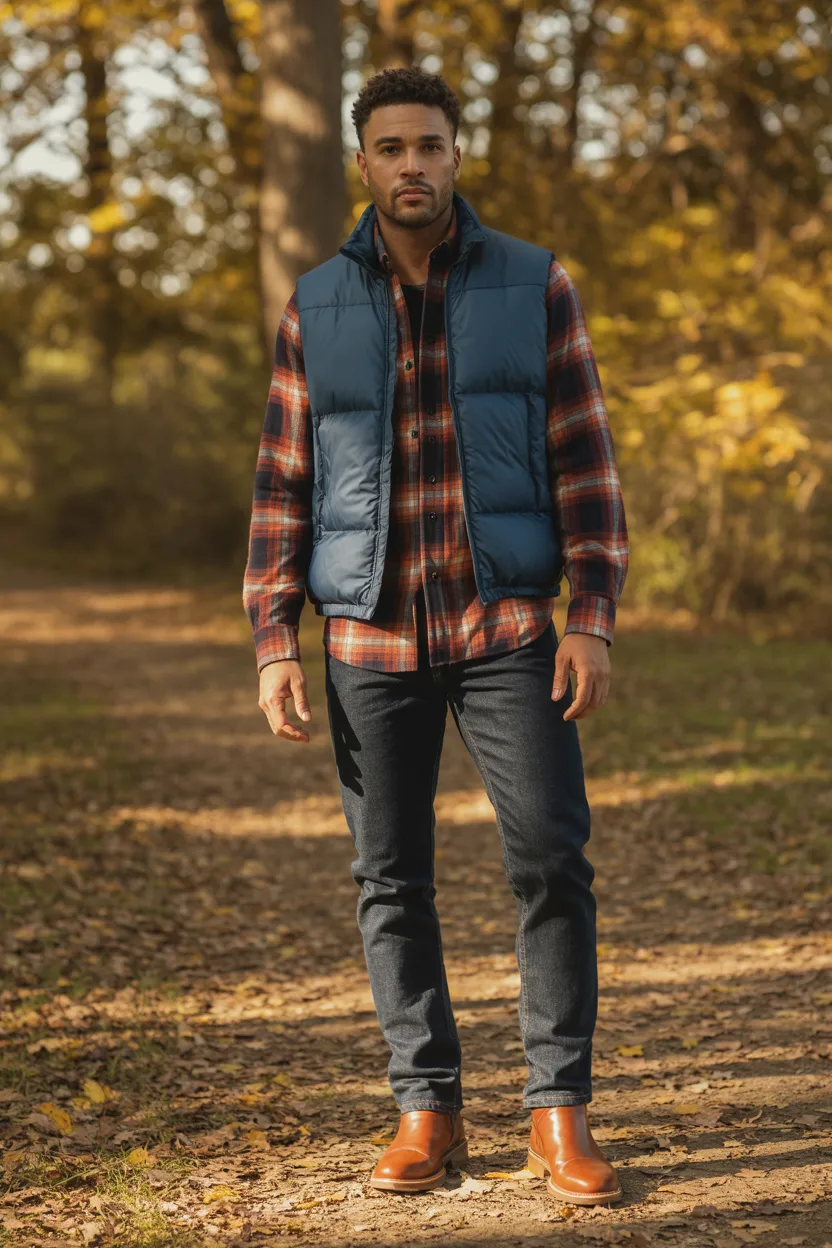
Flannel shirt (worn open or buttoned), navy or black puffer vest over the top, slim jeans, clean boots. Why it works: The vest adds core warmth without restricting arm movement or adding sleeve bulk. The flannel provides arm coverage and color. The detail that matters: The puffer vest color should be solid and neutral. The flannel is doing the pattern work — the vest just needs to keep you warm and layer cleanly. Who it’s best for: Outdoor and active guys, anyone who wants that outdoorsy aesthetic without the full mountain-man commitment.
13. Flannel Under a Bomber Jacket What:
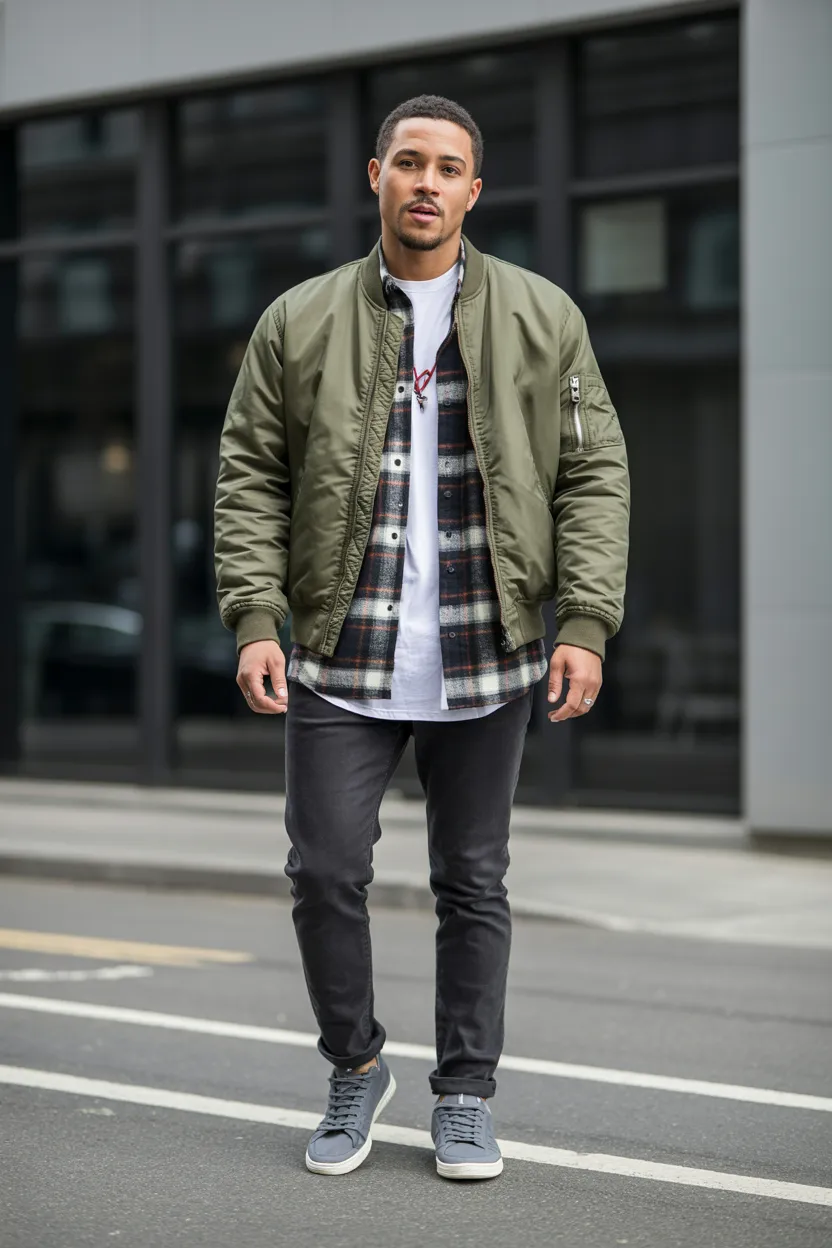
Flannel shirt (tucked or half-tucked), fitted bomber jacket in black or olive, slim dark jeans, sneakers. Why it works: Bomber jackets are inherently casual and youthful. Flannel underneath adds a textural layer, making the combo feel more considered than a plain tee. The detail that matters: The bomber should hit at the hip — if it’s longer than your flannel, it’ll look off. Length alignment matters.
14. Flannel Under a Trench Coat What:
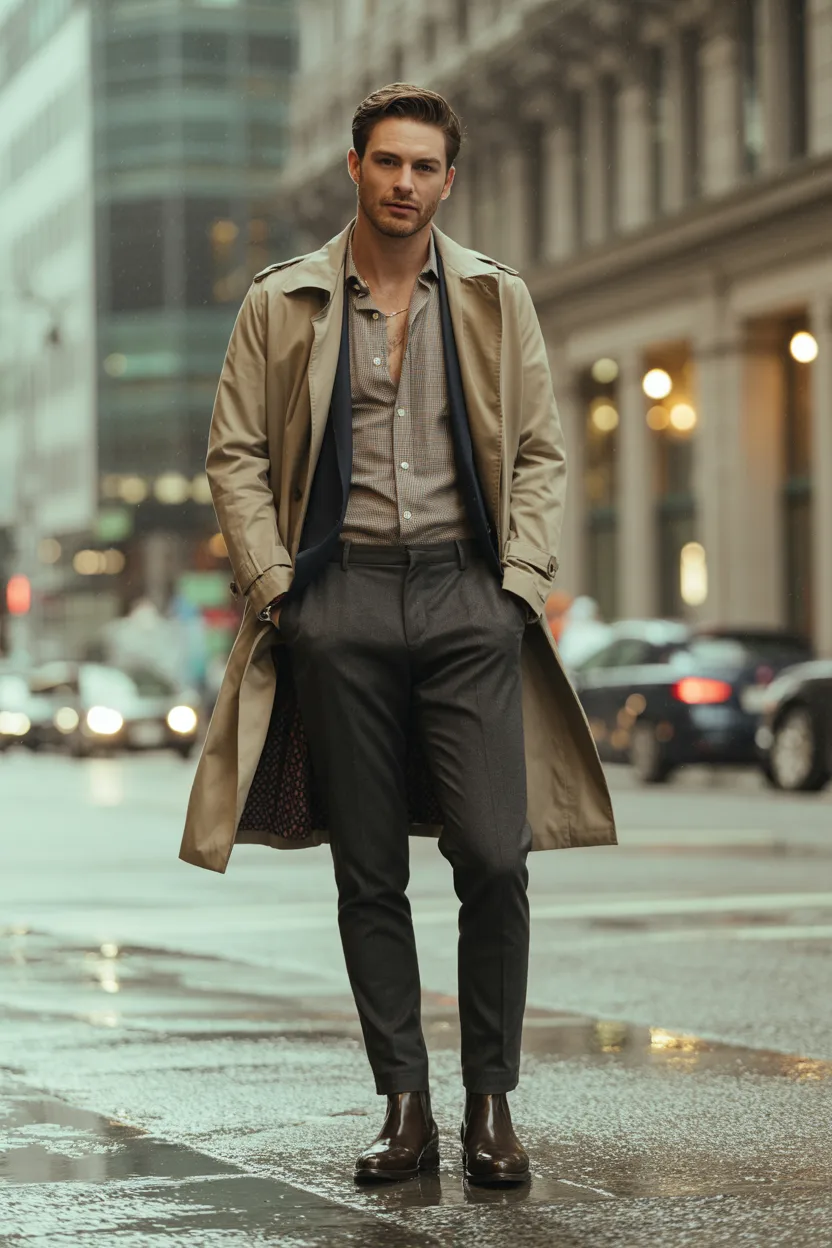
Thin flannel (tucked), slim trousers or dark jeans, trench coat, Chelsea boots. Why it works: The trench coat is urban and polished. The flannel peeking out at the collar and wrists adds warmth and casual energy, keeping it from looking too stiff. The detail that matters: Stick to a muted flannel here — light blue, gray, or soft plaid. The trench needs to stay the dominant piece. Who it’s best for: City-dwellers, men who want to transition the same flannel from casual to polished by simply adding outerwear.
15. Flannel Under a Wool Overcoat What:
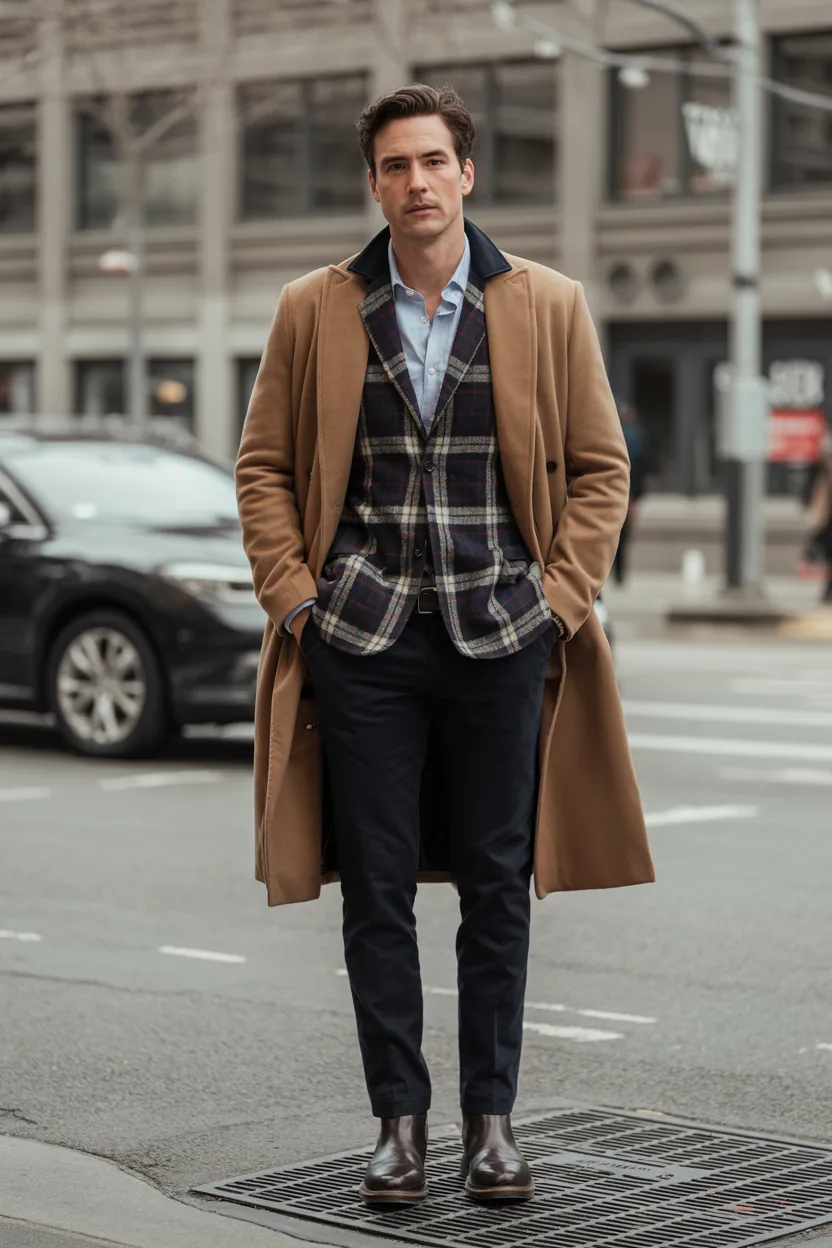
Slim-fitted flannel, slim dark trousers or jeans, structured wool overcoat in camel, gray, or navy, leather boots. Why it works: The overcoat is the authority piece. Flannel as a middle layer adds warmth and an unexpected casual texture beneath the coat’s formality. The detail that matters: The flannel collar should just be visible at the top — it signals intentional layering rather than “I threw on everything I own.”
16. Spring (The Morning Chill Look) What:
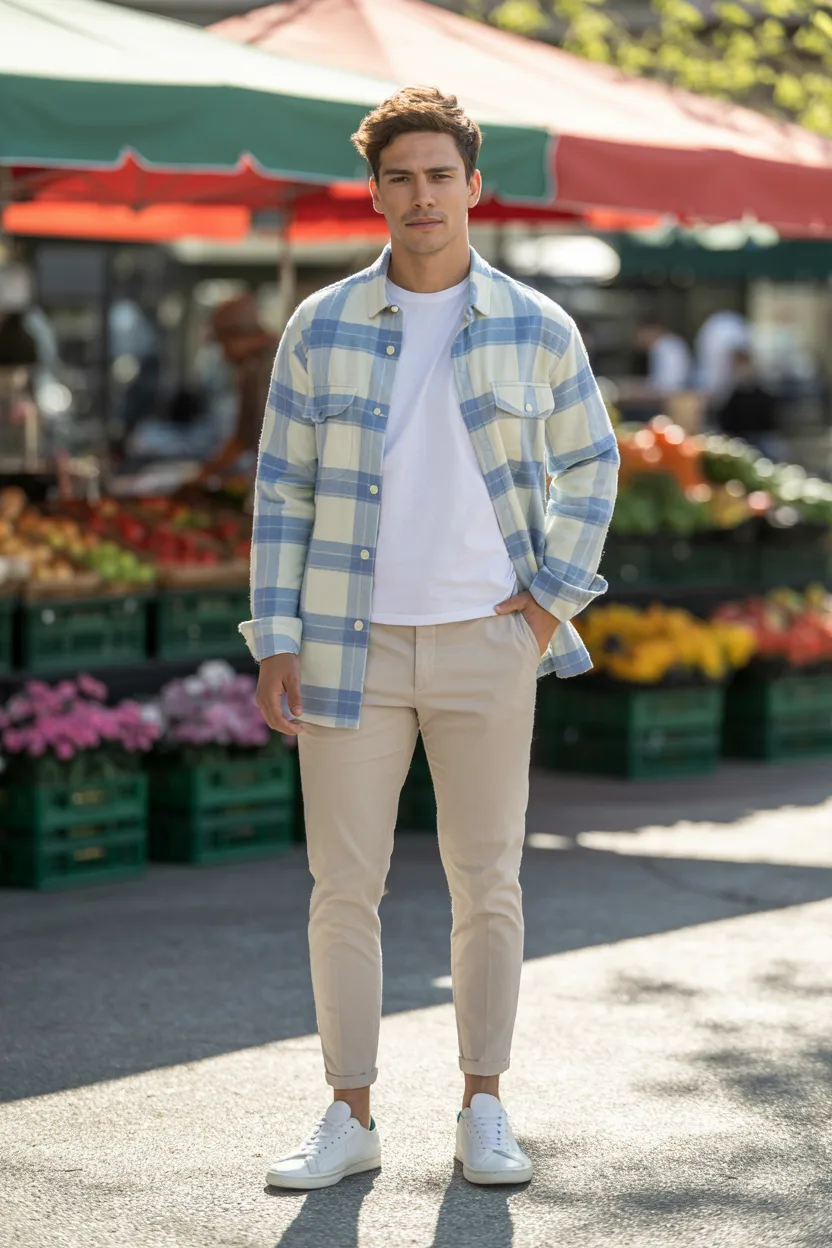
Lightweight flannel open over a tee, slim chinos, white sneakers. When to wear it: Early spring mornings, outdoor markets, casual brunch. The trick: Look for flannel under 5 oz — it drapes more lightly and doesn’t retain heat. Many brands call it “lightweight flannel” or “flannel shirt-jacket,” but ignore the jacket label if it’s thin enough.
17. Summer (The Open Shirt Move) What:
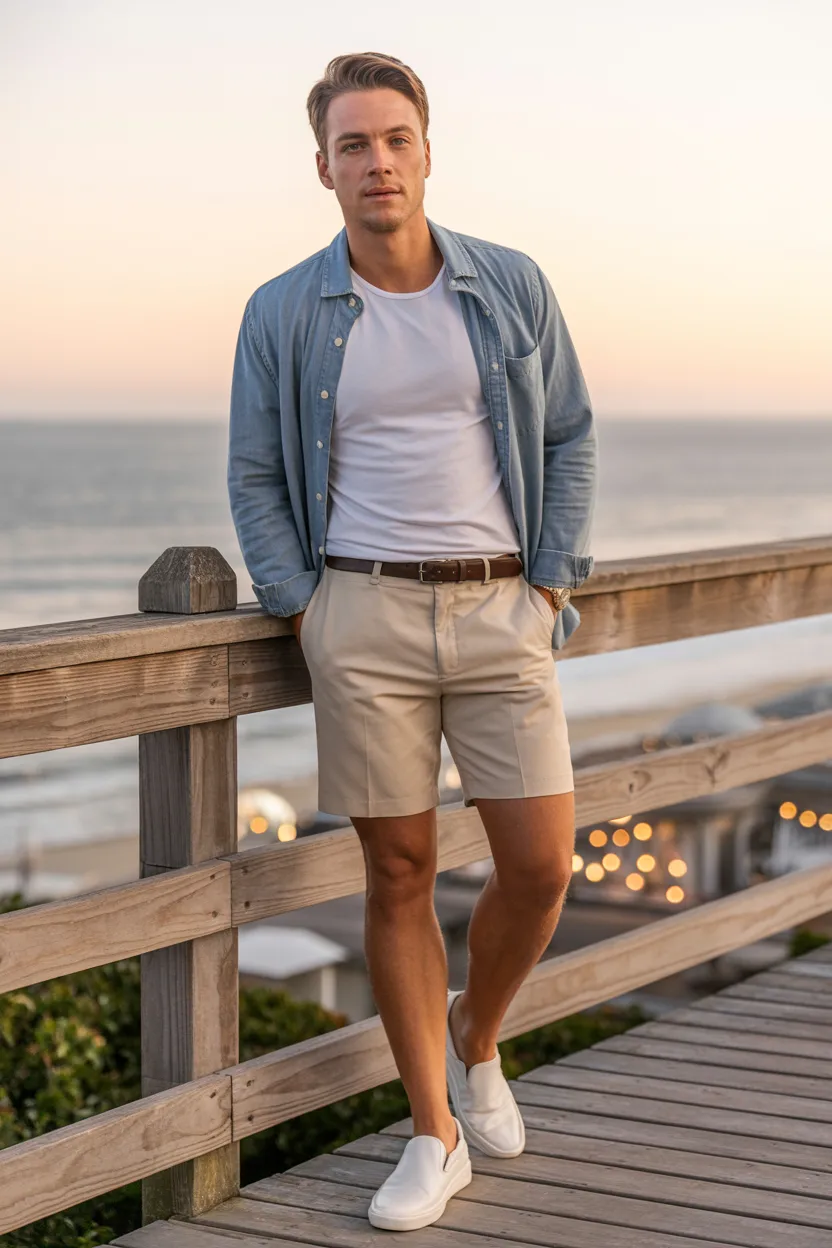
Lightweight flannel worn fully open, like a beach shirt, over a plain tee, chino shorts, slip-on sneakers. When to wear it: Coastal evenings, rooftop bars, summer nights that cool down. The trick: Flannel and shorts can work if the flannel is light enough and the shorts are neat (no cargo shorts). This is one of the more style-confident moves on this list.
18. Early Fall (The Core Look) What:
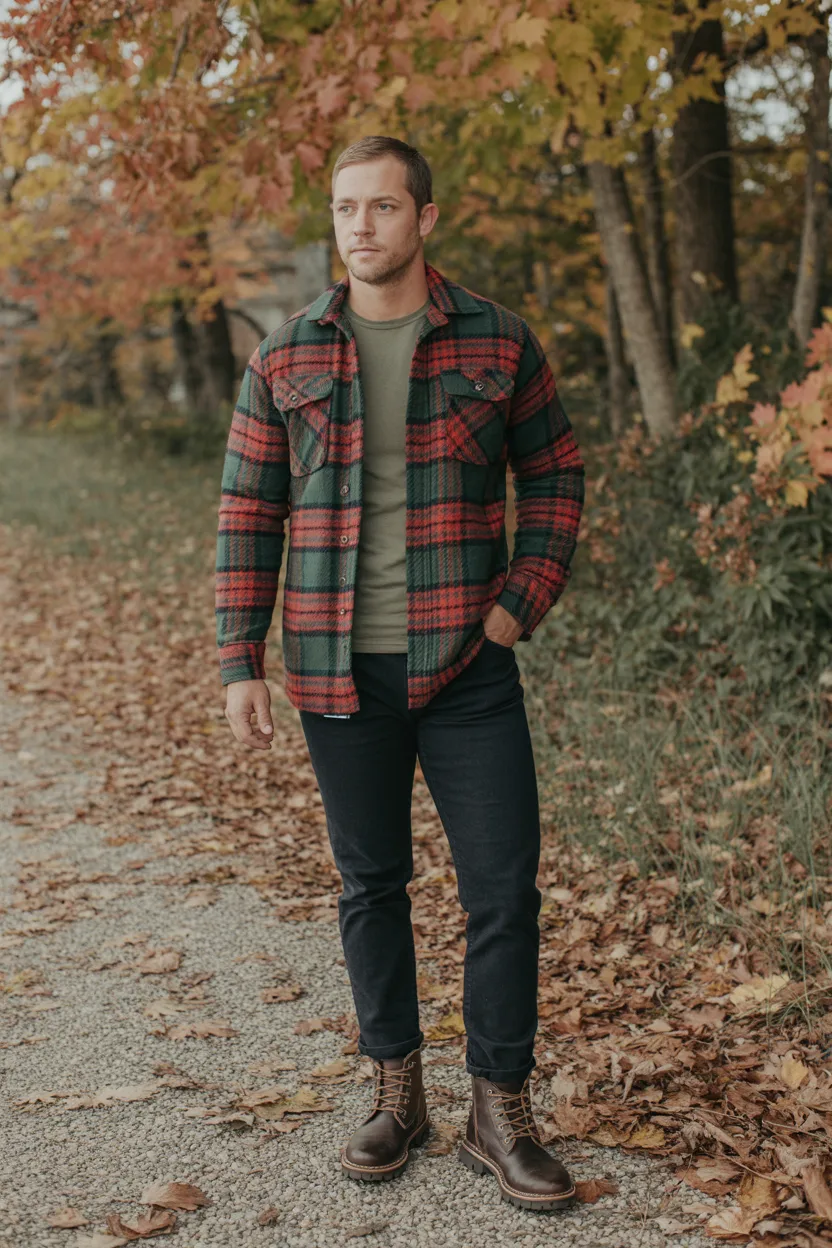
Midweight flannel over a fitted long-sleeve tee, straight dark jeans, leather boots. When to wear it: This is the peak flannel moment — wear it whenever the temperature is between 50°F and–65°F. The trick: Midweight flannel in classic red, green, or navy plaid. This is where flannel lives. Own at least two in this weight.
19. Late Fall / Winter (The Heavy Layer) What:
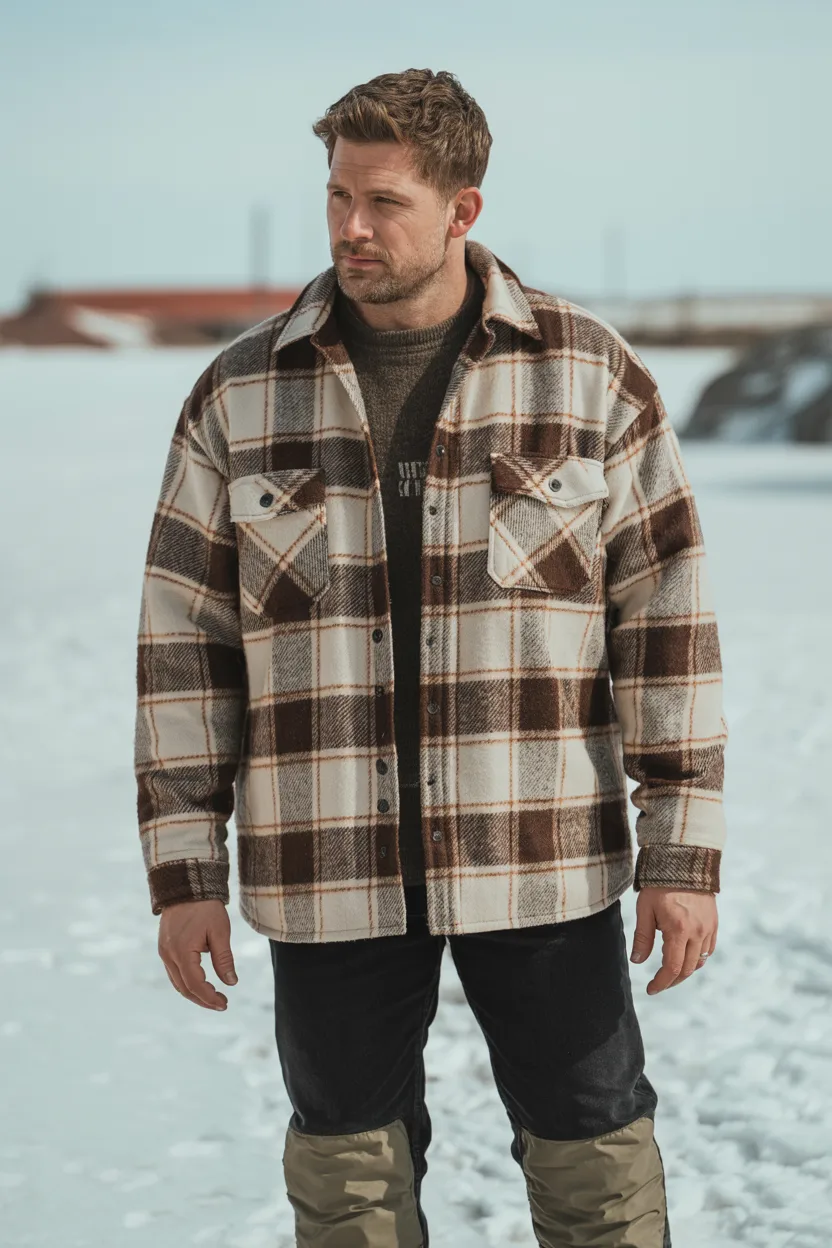
Heavy flannel worn as a jacket over a thermal crewneck, thick dark jeans, insulated boots. When to wear it: Below 45°F before you need a true winter coat. The trick: At this weight, your flannel IS your jacket. Style it like one — keep everything else clean and close-fitting. A heavy flannel hanging open over a baggy outfit looks sloppy.
Mistake 1 — Wearing it too big, “because flannel is supposed to be casual.” Fix: Casual doesn’t mean oversized unless you’re intentionally choosing an oversized look. Fit still matters.
Mistake 2 — Ignoring color coordination. Fix: Flannel has multiple colors in its plaid — pull one of those colors into your pants, shoes, or undershirt. One match is all you need.
Mistake 3 — Only wearing it in the fall. Fix: Lightweight flannels in spring, open over shorts on summer evenings, heavy flannels as jackets in early winter. Flannel has a use in every season.
Mistake 4 — Leaving the collar bunched and unfixed. Fix: Decide whether you’re wearing it with the collar up (casual, deliberate) or down (cleaner). Whatever you choose, make it look like a choice.
Mistake 5 — Pairing two patterns. Fix: Flannel is a pattern. Pair it with solids. Save patterned pants or accessories for when you know exactly what you’re doing with pattern mixing.
WHAT TO ACTUALLY BUY: THE HONEST BRAND BREAKDOWN
Budget (Under $40): Wrangler, Amazon Essentials, Orvis budget line. Good for workwear styling and casual everyday use. Quality is predictable rather than impressive.
Mid-Range ($40–$90): Carhartt, L.L.Bean, Pendleton basics, Uniqlo flannel. This is where most men should shop. Pendleton especially uses genuine wool-blend flannel that ages remarkably well.
Premium ($90–$180): Rails, Faherty, Taylor Stitch, Buck Mason. Better construction, better fabric weight options, longer lifespan. Worth it if flannel is something you reach for regularly.
What to look for regardless of budget:
Check the shoulder seam placement first (it should hit the edge of your shoulder), then check fabric weight (listed in oz or described as “lightweight/midweight/heavyweight”), then check shirttail length (longer is better for tucking options).
THE FLANNEL YOU ACTUALLY NEED: A STARTER WARDROBE
If you own only one flannel, make it a midweight flannel in blue or green plaid. It works with the widest range of outfits and looks appropriate across most occasions.
If you own two, add a solid or very subdued plaid in a neutral — gray, olive, or navy. This is your smart-casual flannel that layers under blazers and trench coats.
If you’re building a full rotation: Add a heavyweight flannel in red or black plaid (your winter layer), a lightweight in a warm tone for spring, and one bold color for when you want the shirt to do the talking.
FINAL WORD: WEAR IT LIKE YOU MEANT TO
The best flannel outfits have one thing in common — they look effortless because the person wearing them made a decision. Not “which shirt smells clean,” but a real choice about fit, color, and what the occasion calls for.
Flannel rewards that small amount of thought. Give it five minutes of consideration, and it’ll carry your entire look without asking for anything else.
That’s the whole secret.



- Be Respectful
- Stay Relevant
- Stay Positive
- True Feedback
- Encourage Discussion
- Avoid Spamming
- No Fake News
- Don't Copy-Paste
- No Personal Attacks
- Be Respectful
- Stay Relevant
- Stay Positive
- True Feedback
- Encourage Discussion
- Avoid Spamming
- No Fake News
- Don't Copy-Paste
- No Personal Attacks
